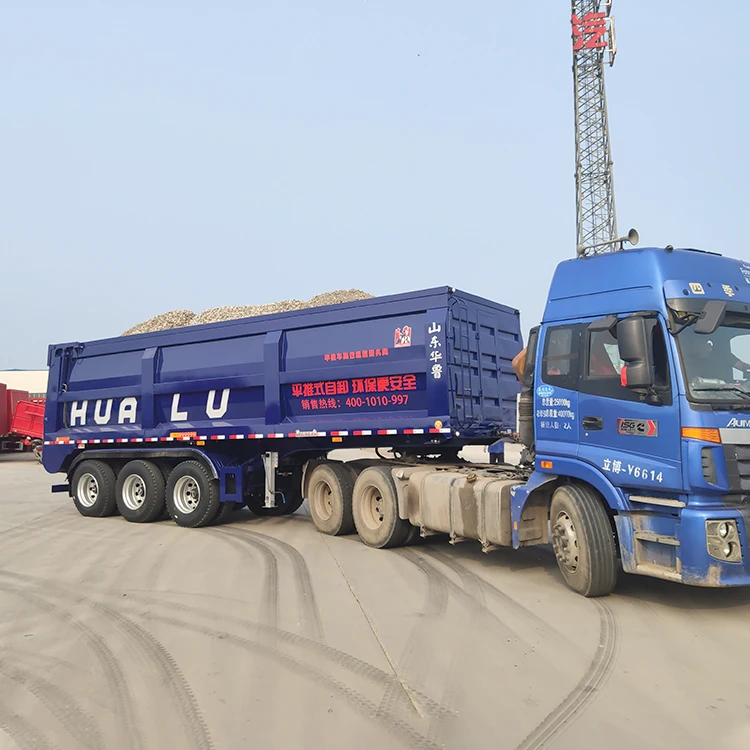
In Kenya’s Machakos sand quarries, a family-owned aggregate firm bled money on every load. Their conventional tipping trailers required stable ground and high overhead clearance—scarce commodities on soft, sloping quarry floors. Rollover scares slowed every cycle, and unloading dragged on for minutes, choking daily throughput. Then they switched to the Hualu 3‑Axle Belt Dump. Instead of tilting the entire body, its heavy‑duty conveyor belt sweeps material out horizontally. The low‑centre‑of‑gravity design keeps the bed stable on uneven terrain, slashing rollover risk. The result? Unloading time dropped 12% , and the fleet logged 16% fewer safety incidents in just three months. The owner now runs eighty units—and his drivers finally sleep easy.
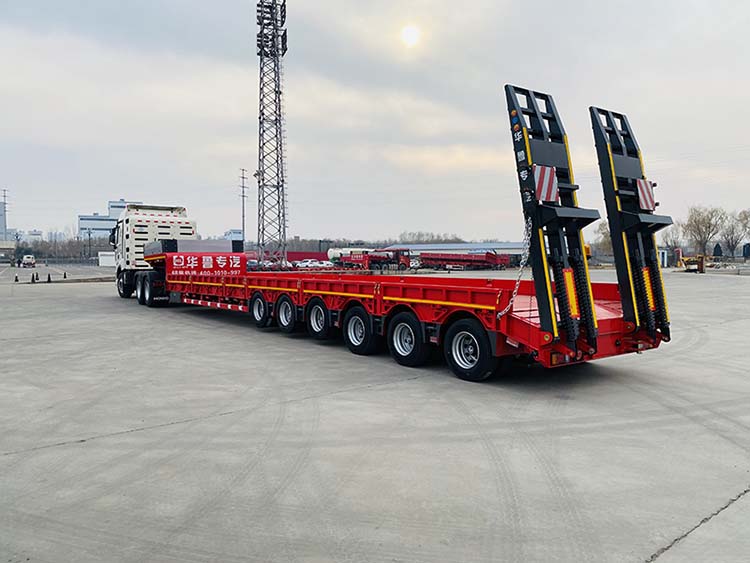
Custom 6-axle hydraulic lifting lowbed semi-trailer engineered for Argentina’s rugged Andean highland mining zones (altitude up to 4,800m). Its hydraulic foldable gooseneck and fully height-adjustable cargo deck solve core transport headaches on narrow, steep mountain roads, cutting downtime and logistics costs for local lithium, copper and gold mines.
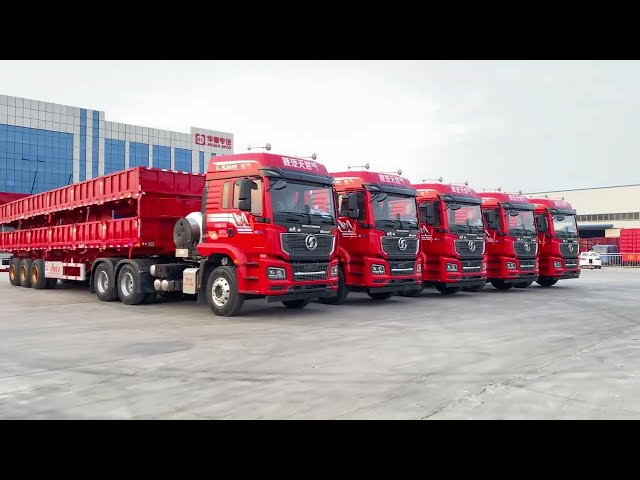
In mid-2024, an Iskenderun-based steel logistics company — Turkey's largest private transporter of long steel products — was facing the collapse of a $9.2 million contract to supply 14,000 tonnes of reinforcing steel to the Çanakkale 1915 Bridge approach road project. Its mixed fleet of 16 European and Turkish flatbed trailers had accumulated 19 deck-plate buckling incidents and 7 main-beam cracks in the preceding eight months, forcing the company to subcontract 40% of its contracted tonnage at a loss. In August 2024, the company replaced its worst-affected units with 12 Hualu Flatbed Trailers — QSTE700 chassis, 8 mm checkered deck, and bolt-on load-securing rails. By the contract completion date in March 2025, the Hualu fleet had moved 8,200 of the 14,000 tonnes — 59% of total contract volume, on 29% of the fleet — with zero structural defects, zero missed delivery windows, and enough margin to absorb delayed loads from the remainder of the legacy fleet. This case study documents how deck engineering, not fleet size, proved to be the binding constraint on heavy steel logistics in one of the world's most demanding construction markets.
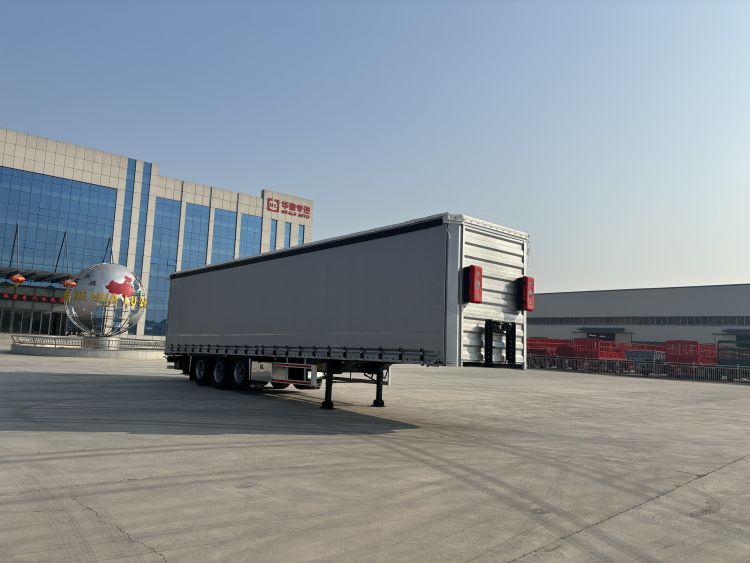
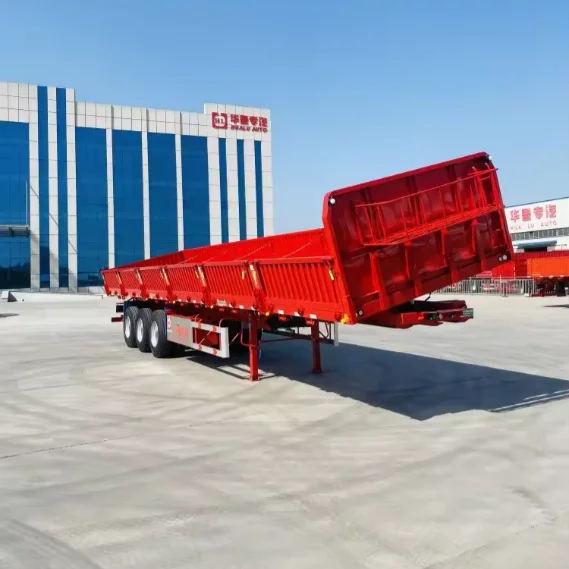
Engineered by Hualu Special Purpose Vehicle Manufacturing Co., Ltd., our 3-axle sidewall semi-trailers are designed to solve the most common logistical headaches in heavy transport. Offering unmatched versatility, superior cargo security, and robust durability, this trailer is the perfect choice for transporting agricultural products, building materials, and bulk goods safely and efficiently.
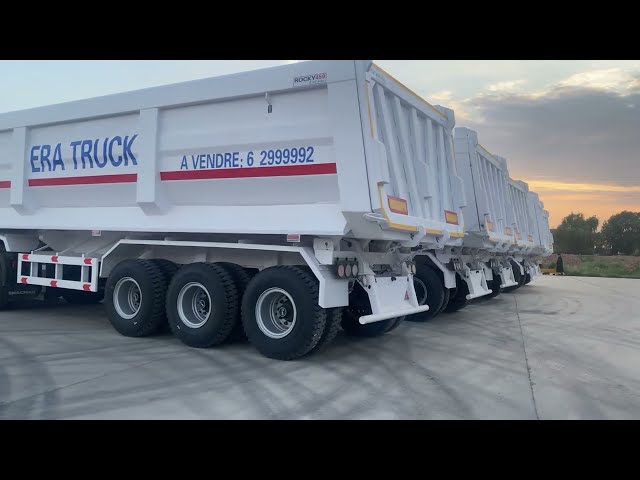
In late 2023, a Port Hedland-based mining services contractor operating in Western Australia's Pilbara region faced a fleet crisis: its 22 ageing end tipper trailers — a mix of Australian and Chinese units purchased over a decade — recorded 31 hydraulic failures and 8 structural cracks in a single operating year, causing 174 days of combined equipment downtime. The contractor replaced the entire fleet with 14 Hualu 4-axle rear tipping semi-trailers between January and December 2024. Over the subsequent 14 months and approximately 2.3 million tonnes of iron ore moved, the Hualu fleet recorded zero hydraulic cylinder failures, zero structural cracking incidents, and a 60% reduction in average unloading cycle time. This case study documents the engineering differences — Hardox 450 body, HYVA twin-cylinder system, QSTE700 chassis — that turned a fleet crisis into a competitive advantage on Australia's most demanding mine-to-port haulage routes.
Ghanaian fleet hauling gold ore and bauxite from remote mines to processing plants was struggling. Their old rear‑dump trailers had limited volume, forcing extra trips that burned diesel and ate into tight margins. Then they swapped them for Hualu side dump semi‑trailers.
These trailers are spacious—the generous dump body moves more material per load. They are brutally strong, built with high‑strength manganese steel frames that survive Ghana’s muddy, potholed mining roads without bending or cracking.
The result? The fleet now transports 10% more cargo every single day—without adding trucks or drivers. More tons per trip mean fewer return cycles, less fuel, and faster project completion. The Hualu side dump’s rapid hydraulic tipping unloads in seconds, further slashing turnaround time.
For this Ghanaian operator, that 10% volume increase translates directly into bigger contracts and healthier profits. Their fleet runs harder, earns more, and leaves the old trailers in the dust.
In 2023, a Johannesburg-based vehicle logistics company operating cross-border deliveries to dealerships in Zambia, Zimbabwe, Botswana, and Namibia was haemorrhaging money through transit damage claims: 8.3% of all vehicles transported arrived with scratches, dents, or undercarriage damage — roughly one in every twelve cars. After switching its fleet of 14 ageing multi-brand car carriers to 10 Hualu 8-car hydraulic-deck semi-trailers, the damage rate collapsed to 0.29% (1 in 340), per-trailer monthly throughput rose from 52 to 78 vehicles, and the company's annual insurance premium dropped 41%. This case study traces how upper-deck hydraulic precision, adjustable loading geometry, and anti-abrasion engineering solved a problem that had been accepted as the cost of doing business in Southern African cross-border auto logistics.
Built for general cargo, agricultural goods, construction materials and container transport, this 3-axle drop side semi-trailer features adjustable side height from 80cm to 1.5m, supports 40-tonne+ payloads and can be fully tailored to match your local road rules and haulage tasks.
In the sun‑scorched highways of São Paulo state, a major Brazilian logistics company hauling heavy excavators and steel coils was bleeding money. Their fixed‑axle low‑bed trailers drank diesel like thirsty giants—even when running empty on return legs. Every extra axle dragged on the pavement, burning fuel and chewing tyres for no benefit.
Then they called Hualu. The factory custom‑built a 6‑axle low‑bed drop‑deck trailer with air suspension on the first three axles—liftable at the push of a button. When carrying 50‑ton loads, all six axles drop to distribute weight safely. But on light loads or deadhead runs, the driver raises those front axles, lifting them clear of the road. Rolling resistance plummets, tyre scrub vanishes.
Over six months, the fleet logged a stunning 17% drop in fuel consumption. Tyre wear and chassis strain also eased, cutting total operating costs by over 15%. The Brazilian team now runs ten more of these Hualu customs, praising the smart lift‑axle design as a game‑changer—turning a heavy‑haul monster into a lean, fuel‑sipping workhorse that saves real money on every kilometre.