

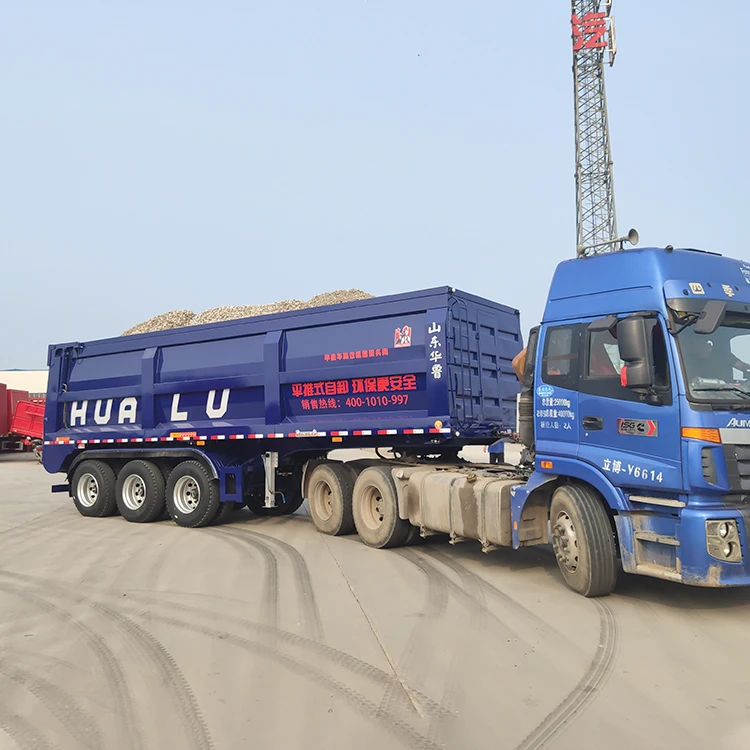
In the sun-scorched Machakos sand quarries, where soft slopes swallow tires and overhead cables hang like guillotines, one family‑owned aggregate firm was bleeding cash on every single load. Their conventional tipping trailers—faithful but flawed—demanded perfectly level ground and sky‑high clearance, luxuries that simply did not exist on the quarry’s undulating floor. Each cycle was a gamble: trucks wobbled, drivers prayed, and unloading stretched into agonising minutes. Throughput choked, margins shrank, and night calls about near‑rollovers became routine. Then they swapped their old fleet for the Hualu 3‑Axle Belt Dump—and the quarry floor stopped being a battlefield.
1. When Gravity Became the Enemy
For years, every 30‑tonne load was a high‑wire act. Raising the entire trailer box on soft, cambered ground turned unloading into a leaning tower of terror. Drivers crept along at walking speed, terrified that a slight shift in weight would send the rig toppling. Unloading took up to four painstaking minutes per trip—enough to turn a 10‑truck shift into a logistical logjam. Worse, the quarry’s overhead power lines and conveyor gantries meant operators had to scout each dump site like bomb disposal experts. Productivity bled away in caution, re‑positioning, and sweaty palms.
2. Horizontal Sweep, Vertical Sanity
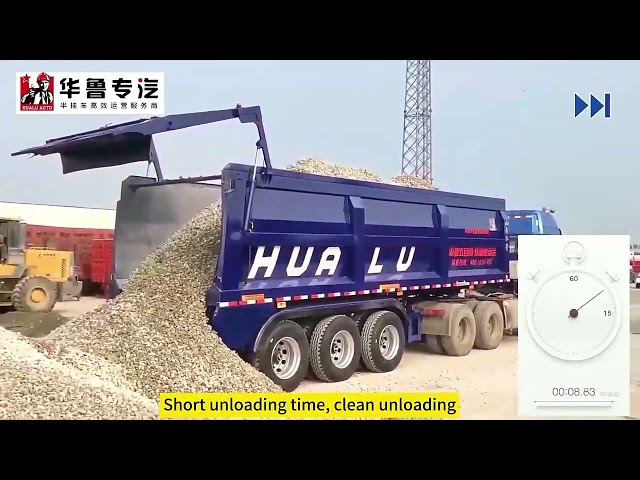
Hualu 3‑Axle Belt Dump rewrote the physics of dumping. Instead of tilting the entire body skyward, its heavy‑duty conveyor belt glides material horizontally off the rear—no elevation, no pendulum sway. The low‑centre‑of‑gravity chassis keeps the bed planted flat, even on a 15‑degree slope where competitors dared not reverse. Suddenly, drivers could back up, engage the belt, and watch aggregates stream out in a controlled, steady flow—all while the trailer stayed level as a dining table. Overhead clearance? Irrelevant. Ground stability? No longer a prayer. The machine turned a hazard zone into a routine parking spot.
3. 12% Faster, 16% Safer
Within three months, the data slapped the doubters silent. Unloading time shrank from 3.2 minutes to just 2.8 minutes per load—a 12% chop that added two extra cycles per truck daily. But the real victory was in the incident log: safety events—from near‑rollovers to jackknife scares—plummeted by 16%. No more frantic radio calls, no more crane rescues, no more spilled loads that wasted hours of cleanup. The fleet’s utilisation rate jumped, fuel burn per tonne eased, and the maintenance yard saw fewer bent stabiliser legs. The family’s accountant, who once winced at every monthly P&L, started smiling.
4. Eighty Units and a Good Night’s Sleep
Today, that same family runs eighty Hualu belt dumps across Machakos and beyond. Their drivers, once jittery veterans with clenched jaws, now joke over morning tea—they sleep easy because their rigs do the worrying for them. The owner, a weathered patriarch who used to pace the office during rainstorms, now watches his fleet from a drone feed, marvelling at belt‑driven precision. “We don’t fight the ground anymore,” he says. “We flow with it.” In an industry where every second and every tilt counts, the Hualu turned a family’s nightmare into a scalable, serene operation—proving that sometimes the smartest lift is no lift at all.