

In March 2023, an Addis Ababa-based construction consortium won the contract for a 340-kilometre highway expansion connecting the Ethiopian capital to a southern logistics hub. The scope required moving approximately 140,000 tonnes of construction materials — reinforcing steel, bagged cement, prefabricated bridge sections, and earthmoving equipment — across the Ethiopian section of the Great Rift Valley, where elevation changes exceed 1,200 metres and paved roads give way to graded gravel for the final 80 kilometres of each supply run.
The consortium's existing transport fleet was a patchwork assembled from previous projects: four ageing flatbed trailers of mixed European origin, six used tipper trucks for aggregate, and a rotating cast of rented trucks during peak demand periods. The project manager's daily log from April 2023 tells the story in numbers: average daily tonnage delivered to the construction front was 287 tonnes against a required 333 tonnes — a daily shortfall of 46 tonnes that, compounded across the 425-day project window, would result in a projected 22-day schedule overrun and roughly $1.7 million in delay penalties at contract rates.
The consortium evaluated three options: expand the rental fleet (fast but expensive — rental rates in Ethiopia's construction corridor had risen 40% year-on-year due to competing infrastructure projects), purchase used European trailers (lower capital cost but unknown maintenance history and no warranty), or procure new equipment from a factory-direct manufacturer with a track record in East Africa.
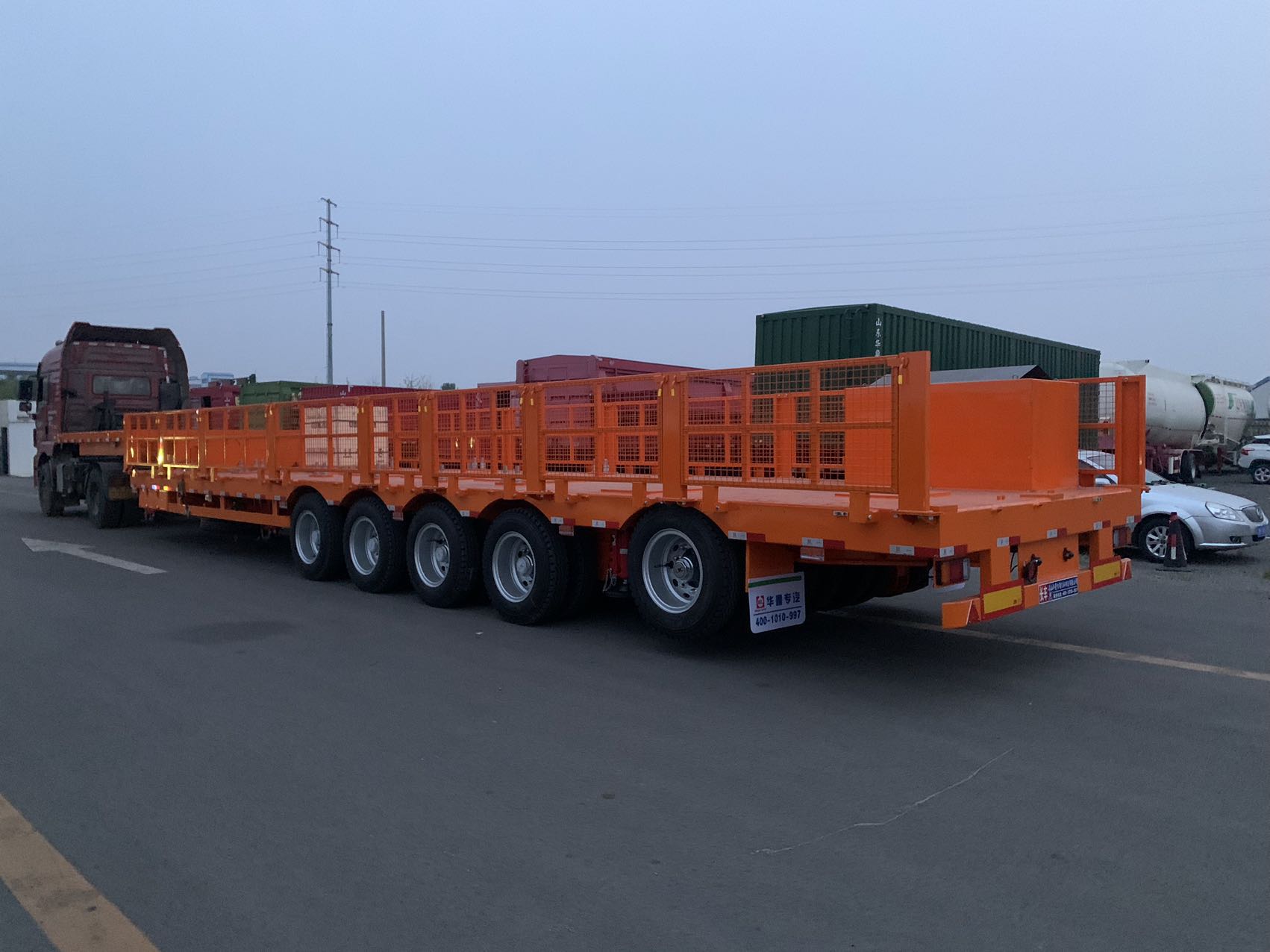
They chose the third option and ordered eight Hualu flatbed semi-trailers — six 40-foot tri-axle units for general cargo and two 45-foot extendable units for bridge sections and oversize loads. The trailers were delivered to Djibouti port and transported overland to the project site in 34 days from order confirmation.
Configuration as delivered:
The eight Hualu trailers entered service in batches of four over a 60-day period starting June 2023. The project manager tracked three key metrics daily: tonnes delivered to the front, vehicle availability at 06:00 dispatch, and turnaround time at the central supply yard. Here is what the data showed comparing the three months before deployment (March–May 2023) against the three months after full deployment (September–November 2023):
| Metric | Pre-Hualu (Mar–May) | Post-Hualu (Sep–Nov) | Change |
|---|---|---|---|
| Average daily tonnage delivered | 287 tonnes | 356 tonnes | +24% |
| Fleet availability at 06:00 dispatch | 79% | 97% | +18 pp |
| Supply yard turnaround time | 48 minutes | 31 minutes | -35% |
| Unscheduled maintenance stops (monthly total) | 9 | 2 | -78% |
| Tyres replaced (3-month total) | 11 | 4 | -64% |
| Rental truck expenditure (monthly) | ~$22,000 | $0 | -100% |
The daily tonnage improvement from 287 to 356 tonnes eliminated the projected shortfall entirely. The project not only returned to schedule — it began accumulating buffer days against the contractual deadline. By the final quarter of the project, the construction front was operating 9 days ahead of the baseline schedule, allowing the consortium to absorb a two-week rainy-season delay in August 2024 without triggering the penalty clause.
The project was completed and handed over in January 2025 — 11 days ahead of the contractual deadline.
The Ethiopian highway project did not succeed because the Hualu trailers had stronger steel, better brakes, or a nicer paint finish than the alternatives. It succeeded because the trailers showed up every morning at 06:00. The old fleet's 79% dispatch availability meant that, on any given day, roughly two out of every ten trucks were sitting in the maintenance yard when they should have been on the road. Every hour of delay at dispatch cascaded into missed unloading windows at the construction front, forced overnight staging of materials in unsecured lay-bys, and idle crews waiting for deliveries that would not arrive until the next day.
Fleet telemetry from the project's logistics management system showed that the Hualu units averaged 6.8 more operating hours per week than the trailers they replaced — not because they were driven faster or loaded heavier, but because they were not stopped for unscheduled repairs. Over the 18-month project, those additional operating hours translated to approximately 3,100 additional tonnes of material reaching the construction front — roughly two weeks of extra delivery capacity created not by working harder, but by breaking down less often.
The two extendable 45-to-60-foot units addressed a specific bottleneck. The project required transporting 46 prefabricated bridge beams, each 16–19 metres long and weighing 18–22 tonnes. On the old fleet, these beams required specialised transport subcontractors who charged a premium and could not always align their schedules with the project's just-in-time delivery sequence. Delayed beam delivery had already caused two concrete-pour cancellations in the first quarter of the project — each cancellation costing approximately $34,000 in wasted ready-mix concrete, crew standby time, and schedule compression downstream.
The Hualu extendable trailers handled all 46 beam movements internally. By extending the deck to the required length for each beam and using the hydraulic gooseneck for self-loading at the precast yard, the consortium eliminated beam transport subcontracting entirely — reducing per-beam transport cost by an estimated 62% and, more importantly, giving the project manager direct control over beam delivery timing for the first time in the project.
For construction firms that buy trailers on a per-project basis — as opposed to ongoing logistics operations — three lessons emerge from this deployment:
Availability is the multiplier that makes every other number work. A trailer that is 97% available at dispatch generates 23% more productive hours per week than one that is 79% available. Across an 18-month project with eight trailers, that gap alone represents roughly 4,500 additional operating hours — the equivalent of having a ninth trailer in the fleet for the entire project duration, at zero additional capital cost.
Versatility in the fleet matters more than specialisation. The extendable trailers were initially purchased solely for bridge beams. Over the course of the project, they also moved bulldozers between construction sectors, delivered bundled rebar when the standard flatbeds were fully utilised, and served as temporary storage platforms at the front during peak material delivery days. Fixed-purpose trailers would have sat idle during these periods.
Factory-direct procurement compresses the decision-to-delivery timeline. The 34-day order-to-delivery cycle from Hualu's Shandong factory to the Djibouti port compared favourably with the 90–120 days quoted by European manufacturers for comparable specifications. For project-driven buyers operating against fixed deadlines, the shorter procurement cycle has tangible value — every week saved in trailer acquisition is a week added to the construction window.
Every Hualu trailer is manufactured by Liangshan Hualu Special Automobile Manufacturing Co., Ltd. — established in 2001, 150,000 m² facility in Shandong, China, 360+ employees. The company holds CCC, ISO 9001:2015, ISO/TS 16949, CE, DOT, and MIIT certifications, with over 50 patented technologies. Hualu exports to 30+ countries worldwide. For flatbed trailer specifications, extendable deck configurations, and project-based fleet planning support, contact the Hualu sales team.