

In September 2024, Jaco van der Merwe, fleet manager of TransFuel Logistics in South Africa, faced a turning point. His firm had long hauled diesel from Durban to industrial clients, but a new contract to supply petrol to 23 retail stations across Gauteng and Mpumalanga forced a major shift. His existing trailers were single‑compartment units, each limited to one fuel type. The new deal required transporting multiple grades—95‑octane, 93‑octane, and diesel—to diverse delivery points, some in remote highlands. Worse, the old tankers suffered chronic weeping; oil stains marked every bay, and environmental inspectors were taking notice. He needed a solution that could handle mixed loads, eliminate every drop of leakage, and maximise productivity—all within South Africa's strict axle‑load limits.
1. The Operational Bottleneck
The variety of offloading sites created chaos. Urban stations demanded up to 12,000 litres of petrol, while rural pumps took only 3,000 litres of diesel. With single‑compartment trailers, the fleet made separate trips for each product, wasting return capacity and incurring cleaning costs between grade changes. Routes included steep mountain passes and rough gravel roads, where surge stressed old welds and caused cracks. Over a year, the manager lost over 18,000 litres to seepage, plus environmental fines. He urgently needed a trailer that could carry different fuels simultaneously, adapt to order sizes, and survive tough terrain without leaking.
2. Hualu's Immersive Site Assessment
Hualu sent a four‑person engineering team to Johannesburg in August 2024. For ten days, they rode with drivers, mapped every delivery route, measured turning radii at tight stations, and studied pump‑attendant workflows. They compiled a detailed dataset of each station's daily fuel intake over a full week, identifying peak periods. They also inspected gravel access roads with potholes and corrugations that stressed chassis. Using this data, they proposed custom compartment sizes—6,000L, 8,000L, 10,000L, and 12,000L—rather than equal tanks. This tailored mix could precisely match daily order baskets, eliminating empty backhauls.
3. Precision Fabrication for Zero‑Leakage
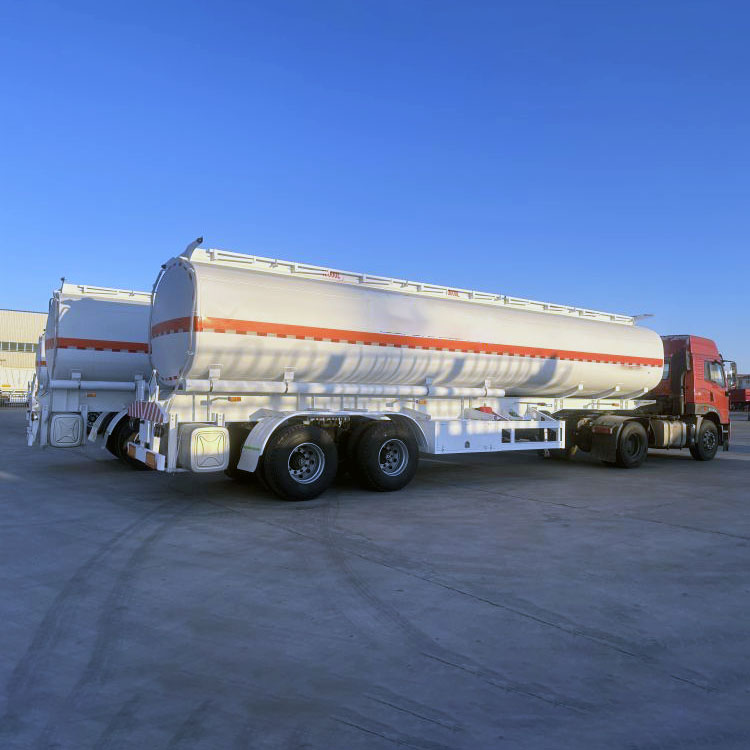
The final trailer was a 2‑axle semi with four independent compartments, each isolated by double bulkheads and its own manifold. To combat sloshing on mountain roads, Hualu installed heavy‑duty anti‑surge baffles every 1.2 metres, reinforced with gusset plates. The baffles also improved braking stability. For leak prevention, all seams were robotically welded and heat‑treated, then dye‑penetrant inspected. Gaskets and O‑rings used Viton fluoropolymer, resistant to both diesel and petrol additives. The tank passed a 48‑hour pressure test at 1.5 times working pressure and a vacuum decay test. A secondary containment sump was added, but not a single drop leaked during trials. High‑tensile steel made the unit 15% lighter than 3‑axle designs, keeping it legal while maximising payload.
4. Measurable Gains and Fleet Transformation
After two months, the results spoke clearly. The flexible compartments let drivers load diesel, 93‑octane, and 95‑octane together, serving up to four stations per trip without returning to base. This reduced total journeys by 25% compared to the old method—directly raising asset utilisation by that same margin. The reinforced baffles and robust seals delivered zero leakage; post‑trip inspections found dry undercarriages for the first time. Tyre wear dropped 20% due to reduced surging. In September 2024 alone, the new Hualu trailer handled 187,000 litres without incident. Jaco declared it a game‑changer: costs fell, safety improved, and the petrol contract was renewed with confidence. Hualu's on‑ground engineering turned a logistical puzzle into a profitable, leak‑free reality.
1.More product cases - Rear Dump semi trailer