
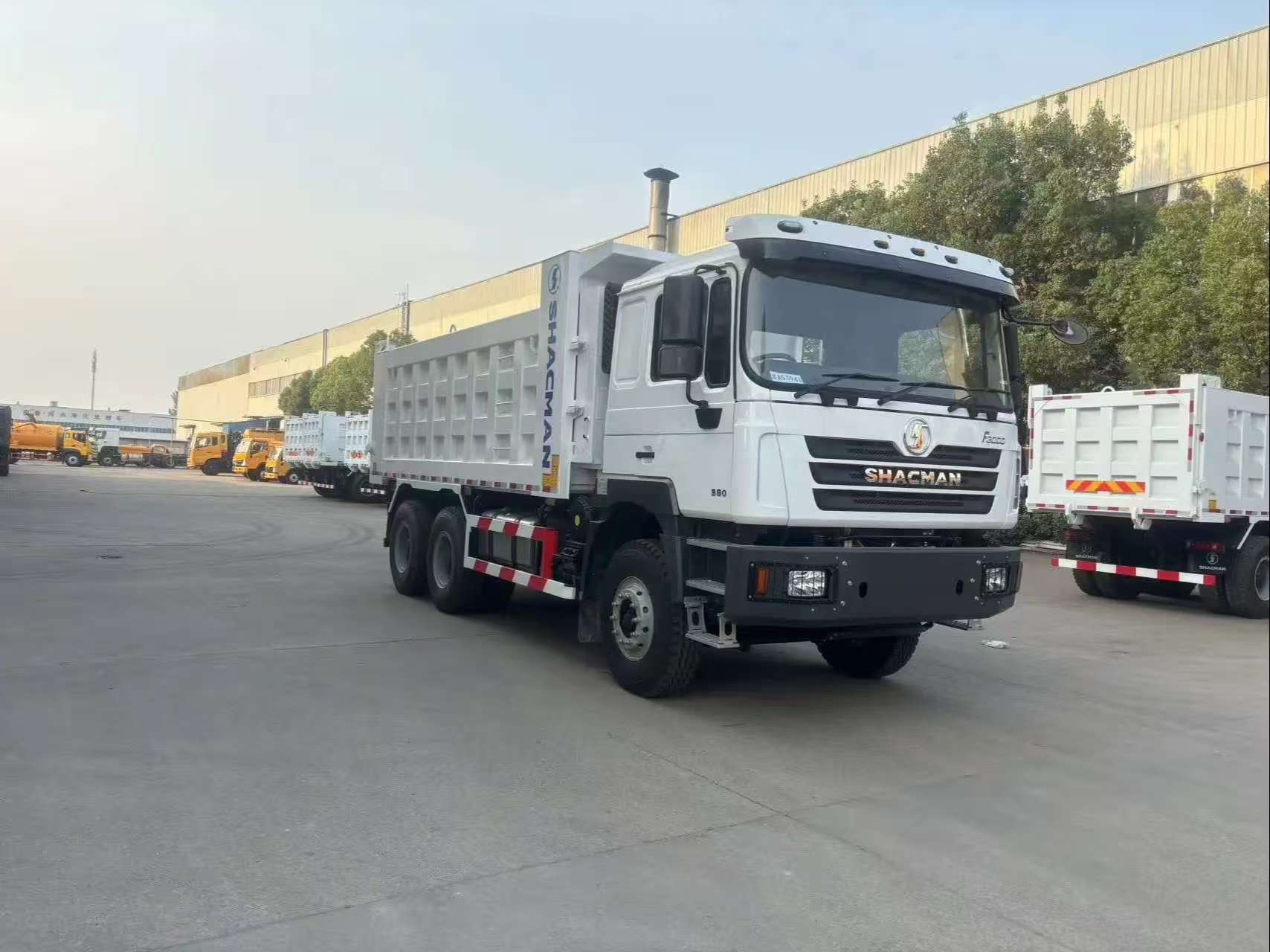
1. Adapted to the extremely poor original road conditions in Africa
In many African mining areas, rural roads and gravel roads are bumpy and muddy, with steep slopes and many long downhill sections. Ordinary small-horsepower vehicles, when fully loaded, are prone to stalling, have difficulty climbing slopes, and frequently need to downshift. Large-horsepower vehicles, with sufficient torque, can climb slopes with heavy loads without losing speed or getting stuck, and have strong capabilities to get out of trouble on rough roads.
2. During the rainy season, the roads are muddy and slippery, and the foundation is soft. With high power output, these vehicles are less likely to skid or stall, and their attendance rate is much higher than that of smaller horsepower models.
II. Africa has a high demand for heavy loads, and transporting minerals and earthwork materials offers better cost-effectiveness.
There are many gold mines, coal mines, quarries and infrastructure earthwork projects in Africa. Regularly, there is overloading in transportation and strict weight limits are not enforced. Large-horsepower engines have abundant reserve power. When pulling stones and soil for a long time, the engines do not overwork, do not overheat, and are less likely to break; small-horsepower engines, on the other hand, are prone to cracking cylinders and wearing out quickly when subjected to long-term heavy loads, and require frequent maintenance.
III. Long-distance and remote transportation, with ample power reserves, durability and ease of use
The mining areas and construction sites in Africa are far apart, and there are few maintenance stations along the way with scarce spare parts. The working conditions of large-horsepower complete machines are relatively relaxed. They do not operate at full capacity all the time. The failure rate is low, the lifespan is longer, and there are fewer shutdowns. Shutting down for one day incurs extremely high transportation costs. This is what customers value most.
2. During the return journey with no load at high speed, there is abundant power, the vehicle travels at a high speed, the number of round trips is greater, and the overall profit is higher.
IV. The high-altitude and high-temperature climate is perfectly suitable.
Many mining areas in Africa are located on high plateaus where the air is thin. The power of small-horsepower vehicles will significantly decrease and lose its strength. Moreover, the year-round high temperatures are extremely hot. The redundant power of large horsepower can offset the power loss caused by the low oxygen and high temperature in the plateau, ensuring no reduction in power and no fatigue during work.
5. Second-hand items retain their value well, have high versatility, and are easy to sell.
There is a large volume of used cars in Africa. Local drivers and contractors only recognize heavy-duty dump trucks, as they are highly versatile and can be used in various fields such as mining, road construction, urban development, and irrigation of farmland. The resale and lease prices are high in the later stages, and customers are more likely to choose heavy-duty vehicles when purchasing, which has a much higher market acceptance than smaller horsepower vehicles.
Six. Capable of handling complex off-road construction sites with strong towing capabilities.
Some scenarios require temporary equipment towing and vehicle rescue. The high horsepower comes with high torque, and it also has self-rescue and auxiliary towing capabilities. No additional auxiliary machinery is needed. Its practicality is excellent for complex construction sites in the wild.
Summary: The five major pain points of African rough roads, overloading, high-altitude and high-temperature conditions, inconvenient maintenance, and heavy engineering loads are all solved by the high horsepower. Although the purchase price is slightly higher, it recovers the cost quickly, causes less downtime, and has high value retention. It is the main recommended configuration for non-conventional dump truck exports.