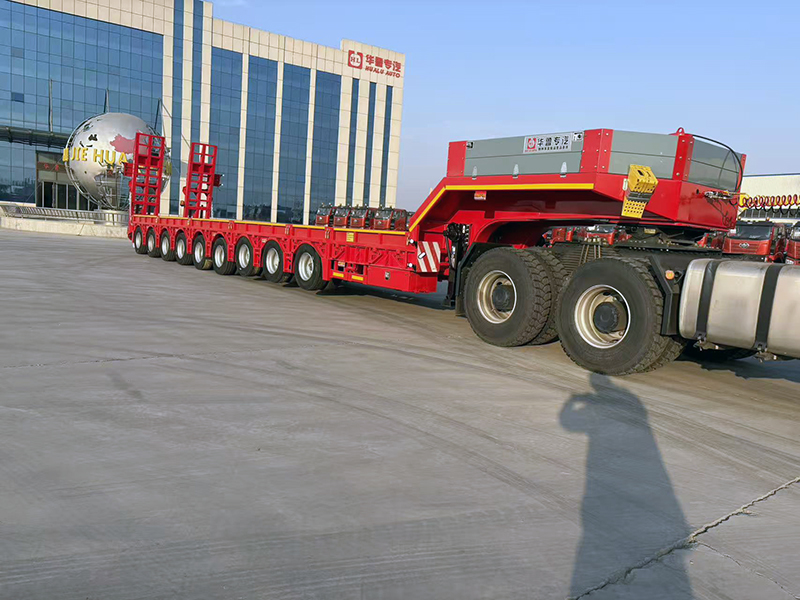

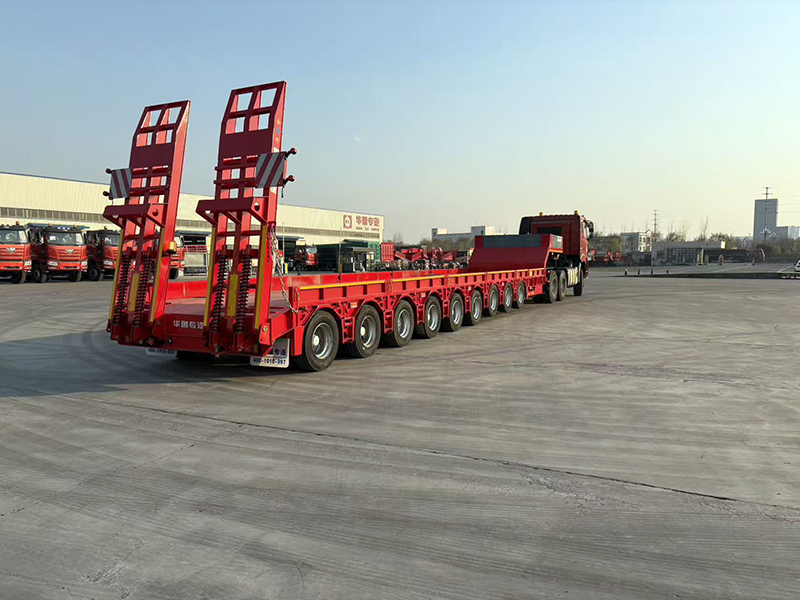
Central Asia—a vast region of rugged steppes, high mountain passes, and rapidly expanding industries—presents some of the world’s most demanding transport challenges. From Kazakhstan’s oil fields to Uzbekistan’s construction boom and Tajikistan’s mining operations, moving heavy equipment reliably is essential yet notoriously difficult. In this environment, the low‑bed semi‑trailer has proven itself to be the optimal solution, offering unmatched stability, loading efficiency, and durability.
Overcoming Challenging Terrain
Central Asia’s geography is defined by extremes. Haul routes often consist of remote desert tracks, unpaved mountain roads with steep gradients, and highways that deteriorate quickly under heavy loads. Temperatures swing from scorching summer highs above 45°C to bitter winter cold that freezes roads. For transporters of excavators, bulldozers, and drilling rigs, these conditions pose constant risks: top‑heavy loads sway dangerously on uneven surfaces, and standard trailers struggle to maintain stability.
Low‑bed semi‑trailers are specifically designed to address these issues. Their exceptionally low deck height—often just 300–500 millimeters above the ground—lowers the overall center of gravity, dramatically improving stability. When navigating winding mountain passes like those in the Tian Shan or crossing washboard gravel roads, this design allows safer cornering and reduces the risk of rollovers. The low profile also minimizes the impact of strong crosswinds, a frequent hazard across the open steppe.
Efficient Loading Without Specialized Equipment
Infrastructure and mining sites in Central Asia are frequently located far from paved roads or fully equipped depots. Many lack permanent loading docks or mobile cranes. Low‑bed trailers address this challenge through features such as detachable goosenecks, hydraulic ramps, or flip‑over ramps. Heavy machinery—whether a bulldozer, wheel loader, or excavator—can drive directly onto the deck under its own power, eliminating the need for auxiliary lifting equipment.
This capability translates into significant time and cost savings. A transport operator in western Kazakhstan reported cutting loading times from over an hour (waiting for a crane) to just fifteen minutes using low‑bed trailers with integrated ramps. Faster turnaround means more trips per day, directly improving fleet productivity.
Built for Durability in Harsh Conditions
Central Asian operations demand equipment that can endure continuous punishment. Low‑bed semi‑trailers designed for this market feature heavy‑duty axles, robust suspension systems, and high‑strength steel platforms that resist twisting and cracking on rough terrain. Many models offer modular configurations—extendable decks, removable outriggers, and multi‑axle arrangements—allowing the trailer to handle everything from standard excavators to oversized mining components.
Such rugged construction reduces maintenance costs and downtime. One logistics company in Almaty, Kazakhstan, switched from traditional flatbed trailers to low‑bed units for a major copper mine expansion. After the change, the company recorded zero rollover incidents, a 40% reduction in tire consumption, and a 25% increase in monthly ton‑kilometer output. The ability to load machinery without external cranes further boosted efficiency.