

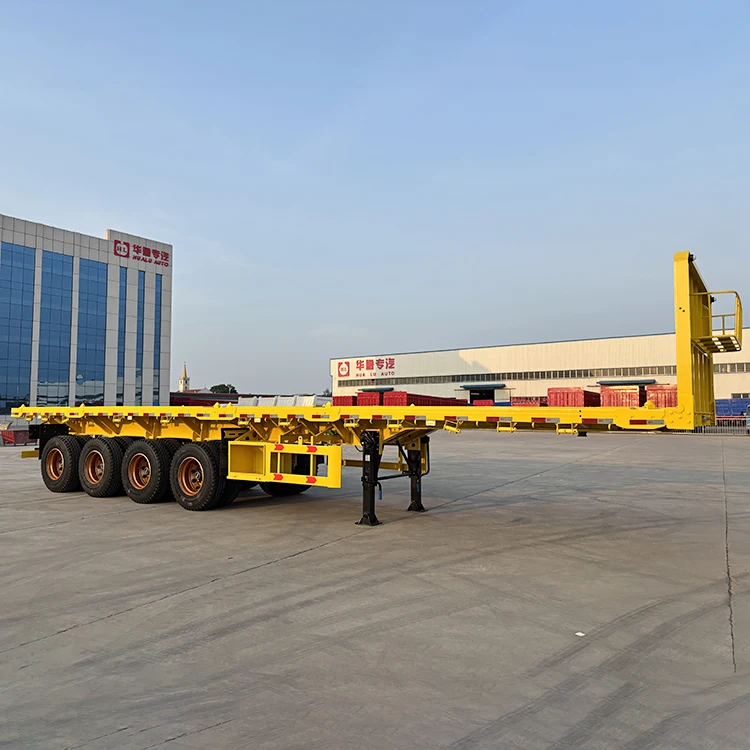
When South African logistics operator set out to renew its national fleet, it wasn't looking for flashy specs or showroom polish. It needed trailers that could survive—and perform—on some of the continent's most punishing routes. The Hualu 4-axle container skeleton trailer delivered exactly that: a documented 10% gain in stability on sharp bends and degraded surfaces, plus the agility to switch between 20ft and 40ft containers without missing a beat. That combination of ruggedness and flexibility ultimately earned an order for 120 units.
1. The Corridor That Tests Everything
The route between Durban and Johannesburg is the backbone of South African freight—and a relentless stress test for any trailer. Steep gradients, potholed stretches, and sudden surface changes punish suspension systems and cargo alike. Drivers on this corridor don't get second chances; a trailer that wallows through a bend or shifts its load on a broken shoulder costs time, money, and sometimes far more. For a high-volume container operator, every trip is a negotiation between tight port schedules and unpredictable road conditions.
2. Stability That Drivers Could Feel Immediately
The trial didn't require lab equipment to prove its point. Behind the wheel, drivers reported noticeably steadier handling under loaded conditions—roughly 10% more stability on sharp bends and degraded surfaces. That margin matters on a wet off-ramp or a rutted stretch outside Pietermaritzburg. The 4-axle skeleton design keeps the container planted, reducing the lateral sway that wears down drivers and cargo alike. Fleet managers noted the difference in confidence as much as in numbers: steadier trailers mean calmer drivers, and calmer drivers make better decisions at speed.
3. Versatility Without Downtime
Container operations live and die by turnaround. The ability to switch swiftly between 20ft and 40ft containers—without pulling the trailer out of service—transformed scheduling at the operator's terminals. Instead of matching trailers to loads and absorbing idle time, dispatchers could assign any unit to any container. That flexibility compounds across a national fleet: fewer bottlenecks at port terminals, faster loading cycles, and a trailer pool that adapts to demand rather than dictating it.
4. Reduced Cargo Shift, Faster Turnarounds
Loaded containers are heavy, top-heavy, and unforgiving when they move. The trailer's secure locking and stable platform cut the risk of cargo shift—a failure mode that can turn a routine run into an incident report. At port terminals, quicker coupling and confident handling translated into faster turnaround, keeping the corridor's rhythm intact. For an operator moving volume daily, those saved minutes per trip add up to real capacity across the fleet.
5. "Built for African Roads"
Fleet managers summed up the verdict in five words: rugged, adaptable, and reliable under pressure—"built for African roads." That phrase isn't marketing gloss; it's an operational requirement. The order for 120 units to renew the national fleet reflects a straightforward calculation: reduced cargo shift risk, steadier handling on degraded surfaces, and the versatility to keep containers moving without downtime. On a corridor that forgives nothing, the trailer earned its place by surviving the road—and improving the economics of every trip.