
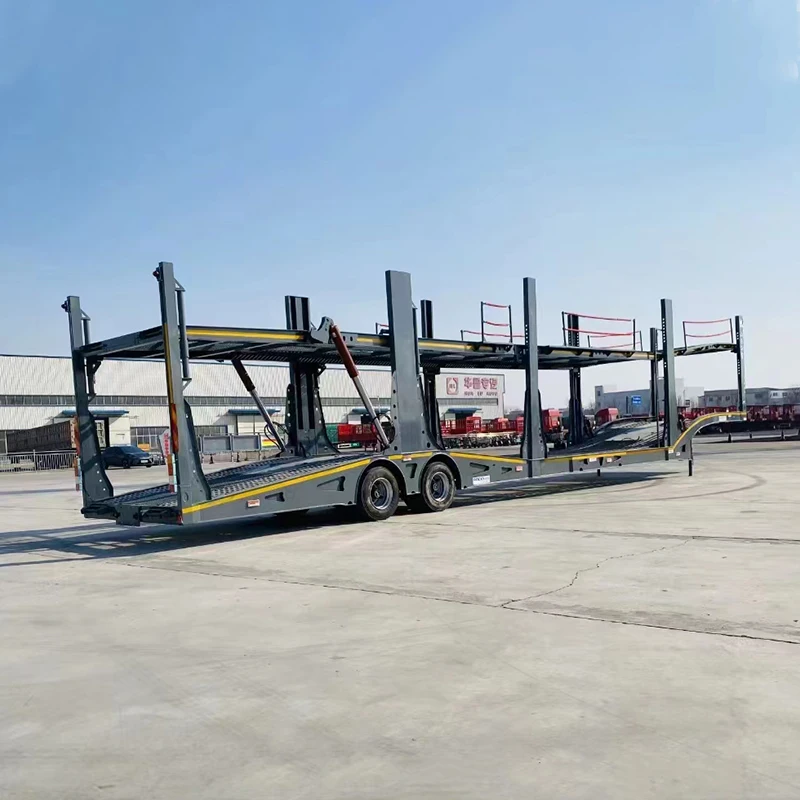
When a major Brazilian auto logistics fleet put a single Hualu car carrier semi trailer through its paces on some of the country's most punishing routes, the result was decisive: an order for 80 units followed within weeks. For an operator hauling new vehicles across uneven mountain roads and wind-swept highways, the Hualu trailer delivered what mattered most—composure under full load, lower operating costs, and equipment that drivers actually trust. The case shows why fleet buyers across Brazil are increasingly choosing Hualu over legacy suppliers.
1. A Single Test Unit That Changed the Calculus
The story began with one demo trailer. The fleet's routes climb steep grades, thread through curves, and cross open stretches where crosswinds hit loaded car carriers hard. Drivers had grown wary of the older equipment, which swayed under full load and demanded constant correction. On the test run, the Hualu trailer behaved differently. Even fully loaded, it tracked straight, stayed planted through curves, and resisted crosswind push. Drivers came back with a simple verdict: it felt "locked to the road." That feedback alone was enough to move the conversation from evaluation to procurement.
2. An 80-Unit Order Confirmed Within Weeks
The decision moved fast. Within weeks of the test, the 80-unit order was confirmed—an unusually swift commitment for a fleet that had every reason to be cautious. The operator wasn't swayed by brochures or showroom polish; the test unit had already answered the questions that matter on real roads. Fleet managers calculated the payoff in uptime, safety, and resale value, and the numbers held up. The order signaled confidence not just in one trailer, but in Hualu as a long-term equipment partner for Brazil's demanding auto logistics market.
3. First Batch Arrives Ahead of the Rainy Season
Timing proved critical. The first batch of trailers arrived before the rainy season, when slick mountain descents and reduced visibility test both equipment and drivers. The fleet dispatched the new units immediately to its toughest routes rather than easing them in on gentle duty. That decision became an unplanned stress test—and the trailers met it. Braking stayed predictable on wet descents, loads remained secure through sharp curves, and drivers reported far less white-knuckle tension in conditions that had previously demanded constant vigilance. The rainy season became the fleet's proof of concept.
4. Drivers Notice a 10% Stability Improvement Instantly
The most convincing data came from the cab. Drivers reported a 10% stability improvement from day one—less sway on curves, smoother braking on descents, and noticeably reduced fatigue on long hauls. For fleets, driver feedback is currency: steadier equipment means fewer incidents, fewer damaged vehicles, and a workforce that isn't worn down by constant correction. The Hualu trailer's composure under full load translated directly into driver confidence, and confident drivers treat equipment better. That loop—stability, safety, care—is exactly what fleet managers want from a new platform.
5. Fuel Logs and Loading Times Tell the Financial Story
The financial evidence accumulated quietly in fuel logs and loading bays. Mileage consistently beat the older equipment, a meaningful gain for fleets running high weekly kilometers. Loading times dropped as well, tightening turnaround and freeing up drivers and yard crews. For this operator, the switch was never about marketing claims; it was about fewer damaged vehicles, steadier loads, and real money staying with the business. Fuel savings and faster loading compound across 80 units, turning a single test trailer into a fleet-wide economics lesson that competitors are now watching closely.