

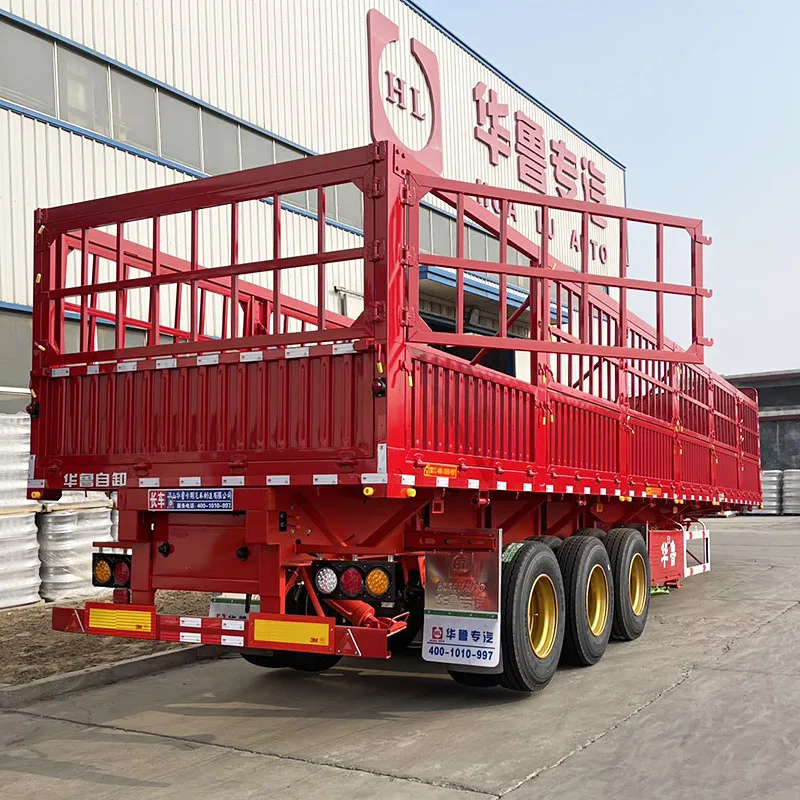
In Chile, where freight routes stretch from coastal ports to high Andean slopes, every empty kilometre hurts. The Hualu Fence Semi-trailer turns that challenge into opportunity: flexible fence-side loading, a reinforced chassis, and multi-cargo adaptability help operators carry more, switch loads faster, and raise utilization by 10%. A Chilean freight operator recently ordered 80 units to do exactly that—without naming the company, the results speak for themselves.
1.A Fleet Built for Chile’s Mixed Cargo Reality
The operator’s daily reality was familiar: long distances, tight schedules, and loads that changed constantly. One day palletized goods, the next sacks, crates, machinery, or construction materials. Empty or half-filled return trips eroded margins. Standard trailers struggled to secure odd-shaped cargo quickly, and loading delays rippled through dispatch. The Hualu Fence Semi-trailer offered a practical answer: a rugged, flexible platform that could handle mixed freight without sacrificing safety or speed.
2.Why 80 Units Made Sense
After trial runs, the operator purchased 80 Hualu Fence Semi-trailers. The decision was not based on one good trip, but on repeatable performance. The fleet needed scale, durability, and low downtime. The fence system allowed crews to secure diverse loads with confidence, while the reinforced chassis handled Chile’s demanding roads. With 80 units, the company could standardize operations, train drivers faster, and deploy trailers across multiple routes without constant reconfiguration.
3.From Coastal Roads to Andean Slopes
These trailers went to work on Chile’s toughest corridors: coastal routes near Valparaíso, central valley highways around Santiago, and steep Andean approaches. Dust, rain, curves, altitude, and heavy loads tested every component. The Hualu Fence Semi-trailer held up. Its fence structure contained shifting cargo, the chassis resisted twisting, and loading crews moved faster because they were not improvising restraints. On high-altitude runs, reliability mattered as much as capacity.
4.Real Runs, Real Results
In one typical week, a trailer carried construction supplies to Santiago, then returned with agricultural crates instead of running empty. Another unit moved machinery to a mining support yard, then picked up packaged goods for the return leg. Loading became faster, damage dropped, and dispatch combined mixed loads with confidence. Across the fleet, utilization rose by 10%, wasted kilometres fell, and profit per trip improved. With 80 units, those gains multiplied across every route.
5.Turning Every Trip into Stronger Profit
For Chilean hauliers moving everything from machinery to produce, the Hualu Fence Semi-trailer proves that flexibility drives profit. The 80-unit order was not just about adding trailers; it was about changing how the fleet works. Fewer empty returns, faster loading, safer cargo, and 10% higher multi-cargo utilization mean every trip earns more. In Chile’s competitive freight market, that is the difference between surviving and leading.