
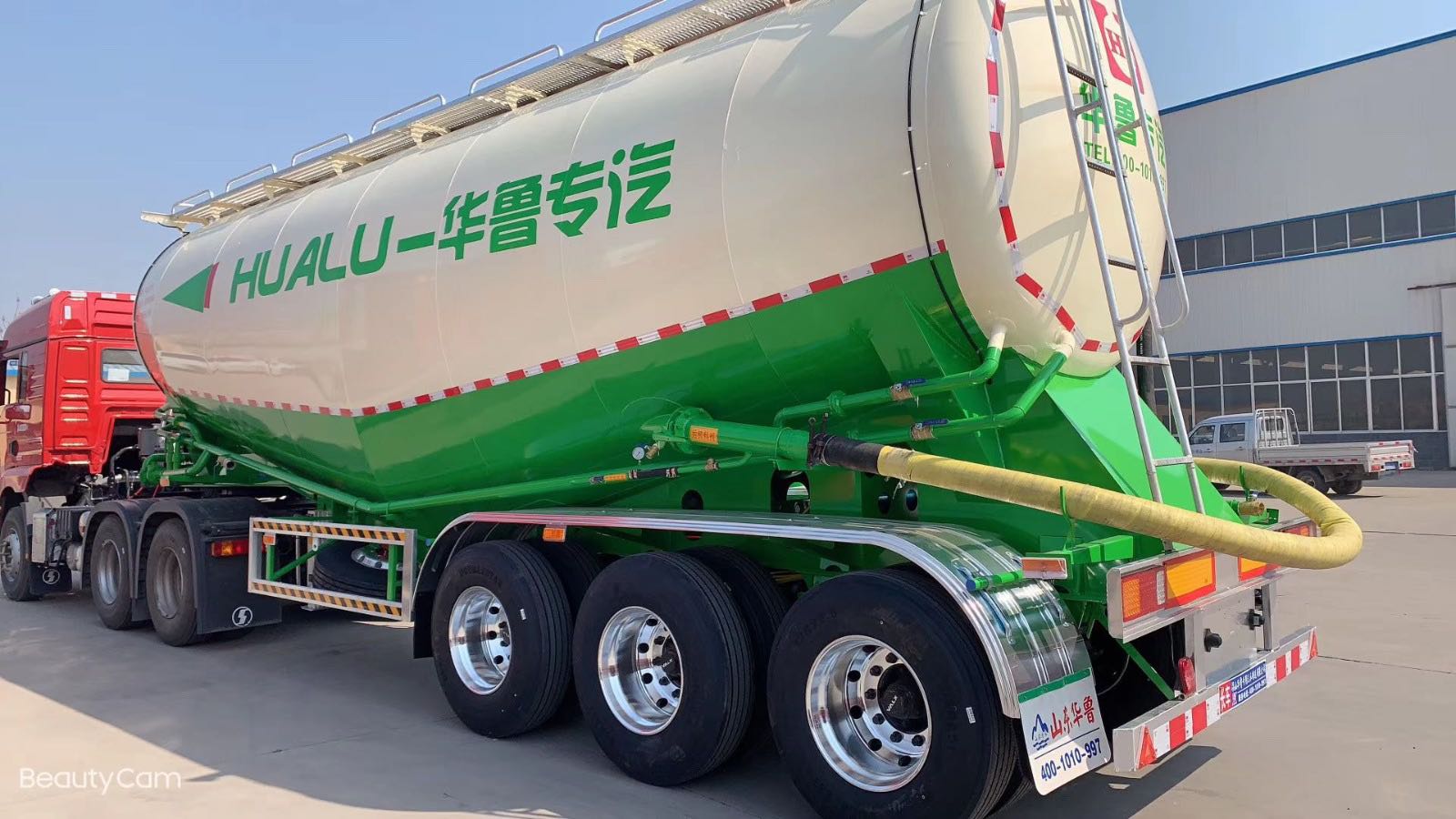
A fuel distributor in the United Arab Emirates hauls diesel and Jet A1 from the Jebel Ali and ADNOC terminals out to construction sites, mining camps, and remote power plants across Dubai and Abu Dhabi — runs that start at a sea-level terminal and end in 45°C desert heat. For years the fleet ran standard tank trailers, and for years the same three problems followed every drop: dust and moisture crept in through worn seals to contaminate fuel — three rejected batches a month —, vapor escaped through aged vents to lose 900 litres a month to evaporation, and uncalibrated meters produced delivery disputes with customers. The rejected batches were the visible loss; the real cost was a customer who no longer trusted the tanker that pulled up to their site.
A tanker that breathes in dust and breathes out vapor is the wrong tool for fuel in the Gulf: every contaminated batch is a load you haul back unpaid, and every litre that evaporates is a litre you paid for and never sold. Hualu already proved this tank discipline on the steppe in its tank trailers in Kazakhstan, where sealed, corrosion-resistant tanks kept fuel clean on long hauls. The 45,000-litre tanker is the same logic scaled to the desert: seal it shut and measure it right.
The distributor's operations director compared three tanker suppliers and chose Hualu on two criteria: containment and accuracy. A Hualu 45,000-litre tank trailer pairs a four-compartment aluminum tank with pressure-vacuum vapor-recovery vents that hold vapor in instead of letting it out, fully sealed manholes and bottom valves against dust and moisture, and a calibrated metering system that settles a delivery dispute before it starts. The frame and running gear use the same protected-cargo thinking as its curtain-side trailers in Poland, where cargo travelled protected end to end, and the same high-tensile, low-weld frame as its lowboys in India, where weld fatigue was driven to zero cracks. Eighteen Hualu tank trailers were delivered in 32 days, in time for the summer demand peak.
By September 2026, the eighteen Hualu tank trailers had completed a full summer quarter of fuel delivery. The numbers the operations director now reports to the board:
| Metric | Standard Tank Trailer (Baseline) | Hualu Tank Trailer | Change |
|---|---|---|---|
| Contamination incidents (monthly) | 3 | 0 | -100% |
| Product loss (vapor + spill, L/month) | 900 | 120 | -87% |
| Delivery time per 45,000L drop | 55 min | 38 min | -31% |
| Metering discrepancy | 1.2% | 0.3% | -75% |
| Payload per trip | 33 t | 35 t | +6% |
| Tank recoating interval | 24 months | 60 months | +150% |
| Fleet downtime (days/month) | 3 | 0.5 | -83% |
| Fuel per tonne delivered | 1.00 | 0.94 | -6% |
The two figures that moved the P&L most were the contamination and the vapor loss. A sealed tank with vapor recovery does not just stop a rejected batch — it removes the load-back, the dispute, and the lost customer in one change, which is why the same fleet now delivers 35 tonnes a trip with every litre accounted for. It is the same "drive a recurring failure to zero" result that Hualu delivered for its tank trailers in Kazakhstan — the tanker that seals its cargo in and measures it right wins the run.
An open vent lets the tank breathe — vapor out in the heat, dust-laden air in as it cools — and a worn seal turns that breathing into contamination. A pressure-vacuum vapor-recovery vent closes that loop: it holds vapor inside the tank until the next filling cycle recovers it, and sealed manholes and valves keep the desert out entirely. A calibrated meter removes the last argument at the drop point. The difference compounds across a fleet: clean fuel every trip, 780 litres a month that no longer vanish, and a delivery that reconciles to the litre.
Fuel logistics is a game of clean, accounted deliveries. The distributor who wins is not the one with the biggest tank but the one whose fuel arrives uncontaminated and reconciled to the litre — and in the Gulf, where a summer day pushes a tank past 45°C and every vented litre is revenue gone, a tanker that seals its cargo in and measures it right turns the delivery run from a source of loss into a steady, trusted supply. The Emirati case shows that the right tank keeps both the fuel and the customer clean.