
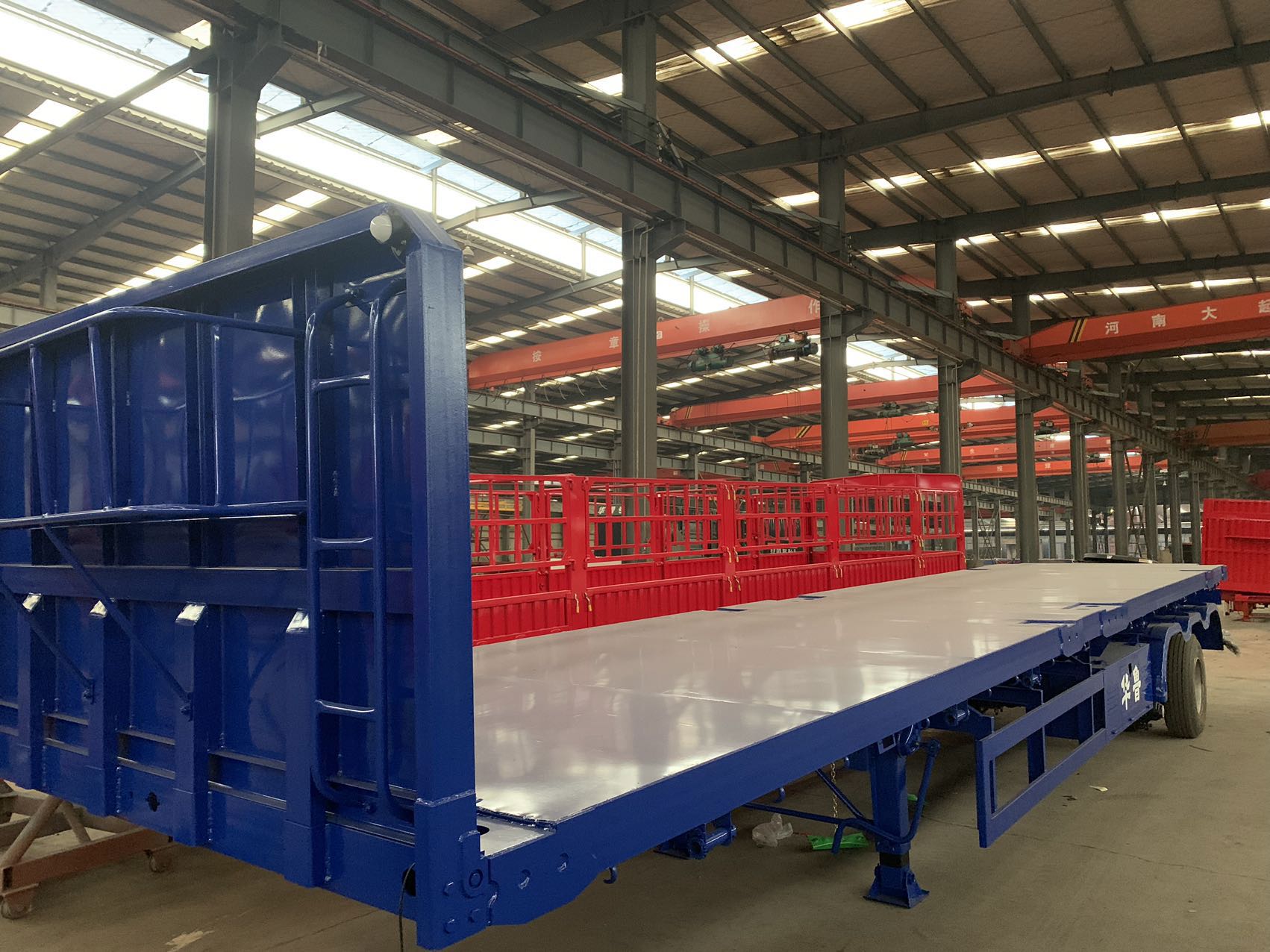
A steel distributor in northern Vietnam hauls hot-rolled coils from Hai Phong port and the Thai Nguyen steel works to manufacturers across the Hanoi corridor — a run of hard braking, sudden lane changes, and monsoon-damp roads. For years the fleet ran standard flatbeds, and for years the same three problems followed every coil: coils that crawled on the deck under hard braking because there was no well to hold them, a 9% coil-damage rate from steel rubbing steel and edge dents at delivery, and wooden dunnage that rotted in the coastal humidity and had to be re-cut every few weeks. The cargo claims were the visible cost; the real cost was a re-strap on every second run and a customer who stopped trusting the delivery.
A coil that moves on a flat deck is a coil that costs you twice — once in the claim, once in the lost order. Hualu already showed how load geometry defeats a moving load in its belt trailers in Indonesia, where rollover accidents were driven to zero with the right discharge design. The flatbed is the same logic turned on cargo securement: give the load a shaped seat and it cannot move.
The distributor's logistics manager compared three flatbed suppliers and chose Hualu on one decisive feature: the coil well. A Hualu flatbed seats each coil in a V-shaped well so the round load has a flat-to-flat base that cannot roll or creep, with full-length chain tie-down rails so straps pull the coil down into the well instead of across it. The deck and frame are hot-dip galvanized against monsoon humidity, and the frame uses the same high-tensile, low-weld construction Hualu proved in its lowboys in India, where weld fatigue was driven to zero cracks, and the same cargo-protection thinking as its curtain-side trailers in Poland, where cargo travelled protected end to end. Thirty-two Hualu flatbeds were delivered in 30 days, in time for the peak steel season.
By September 2026, the thirty-two Hualu flatbeds had completed a full quarter of coil deliveries. The numbers the logistics manager now reports to the board:
| Metric | Standard Flatbed (Baseline) | Hualu Flatbed | Change |
|---|---|---|---|
| Load-shift incidents (monthly) | 4 | 0 | -100% |
| Coil damage rate | 9% | 2% | -78% |
| Re-strapping time per load | 25 min | 9 min | -64% |
| Cargo claims (monthly) | $8,500 | $1,800 | -79% |
| Payload per trip | 38 t | 41 t | +8% |
| Deck recoating interval | 18 months | 48 months | +167% |
| Fleet downtime (days/month) | 3 | 0.5 | -83% |
| Fuel per tonne hauled | 1.00 | 0.94 | -6% |
The two figures that moved the P&L most were the load shifts and the damage rate. A V-shaped well does not just stop a coil from moving — it removes the re-strap, the claim, and the lost customer in one change, which is why the same fleet now delivers a 41-tonne coil that arrives with its edges untouched. And a galvanized deck that lasts 48 months instead of 18 means no mid-season recoating and no truck parked while dunnage is re-cut. It is the same "drive a recurring failure to zero" result that Hualu delivered for its belt trailers in Indonesia, cutting rollover accidents by 100% — the trailer that holds its load wins the run.
A round coil on a flat steel deck has one point of contact and every reason to move; the only thing holding it is strap tension, which loosens as the load settles and the road shakes. A V-shaped well turns that single point into a seated, flat-to-flat base that physically cannot roll, so the chains and straps are a secondary hold rather than the only one. The difference compounds across a fleet: nine minutes to strap instead of twenty-five, no re-strap on the highway, and a coil that arrives as clean as it left the port.
Steel distribution is a game of undamaged delivery. The supplier who wins is not the one with the cheapest freight but the one whose coils arrive with clean edges and no claim paperwork — and on Vietnam's Hai Phong–Hanoi corridor, where a monsoon downpour can turn a hard stop into a load-shift in seconds, a flatbed that seats the coil instead of strapping it down is the difference between a repeat order and a lost account. The Vietnamese case shows that the right deck geometry keeps both the coil and the customer in place.