

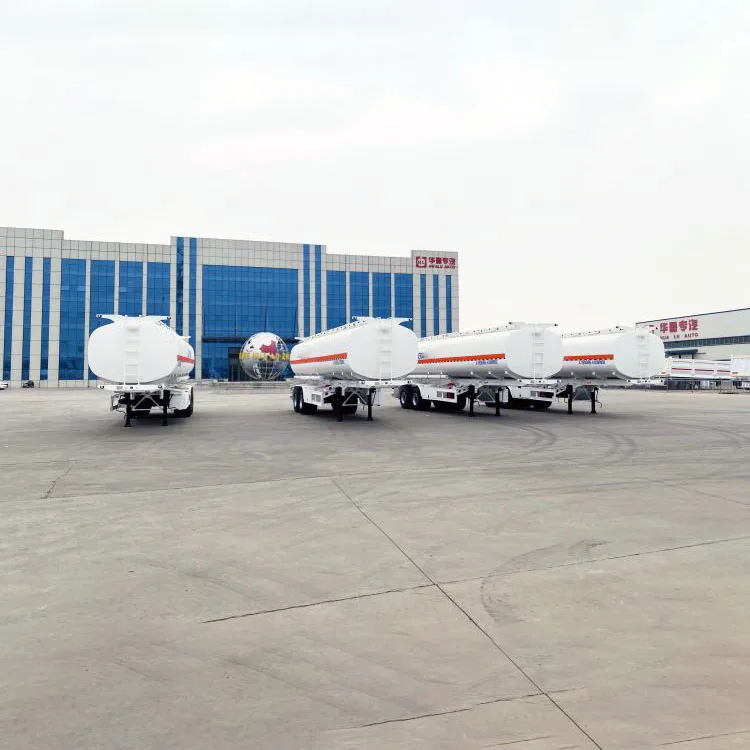
South Africa’s N3 highway—a 415‑km artery linking Johannesburg’s industrial heartland to Durban’s sprawling port—is the lifeline of the nation’s fuel supply. But it is also a graveyard of caution: plunging gradients, hairpin bends, and unpredictable Highveld thunderstorms claim dozens of tankers every year. For one established logistics operator, the weekly convoy of fuel haulers had become a gamble—until they replaced their entire fleet with 80 custom‑built Hualu Oil Semi‑Trailers. The shift didn’t just improve numbers; it rewrote the culture of safety on one of Africa’s most dangerous roads.
1. The Corridor of Chaos
Between the escarpment of the Drakensberg and the humid coast, the N3 drops nearly 1,200 metres in less than 50 kilometres. The notorious Van Reenen’s Pass features a 6‑degree slope with emergency escape ramps every 8 kilometres—yet runaway trucks still barrel through the barrier at least twice a month. Our operator’s previous tankers, built to generic specifications, often suffered from high centre‑of‑gravity and inadequate brake modulation. In the two years before the Hualu order, they recorded 9 rollover incidents and 14 brake‑fade emergencies, each costing millions in lost cargo, road closures, and insurance premiums. Drivers whispered about “black Wednesdays” when rain turned the asphalt to ice.
2. The 80‑Unit Pivot
Faced with mounting pressure from insurers and shippers, the operator issued a radical tender: replace every existing trailer with a single, unified model that could be tuned to their exact route. Hualu won the bid by offering not just proven tanker construction, but a blank canvas. The operator specified a 200‑mm wider axle spread to lower the roll‑centre, plus a 1.3‑metre increase in overall trailer length—accommodating additional internal surge baffles without exceeding South Africa’s 48‑tonne gross mass limit. The order of 80 units was placed in a single batch, ensuring uniform maintenance, driver training, and spare parts inventory—a logistical masterstroke that cut downtime by 40% from day one.
3. Engineering That Delivers 12% Safety Gains
Each Hualu Oil Semi‑Trailer integrates an advanced EBS (Electronic Braking System) with real‑time load sensing, automatically adjusting brake force on each axle during steep descents. Reinforced anti‑roll bars, paired with a lowered fifth‑wheel coupling, drastically reduce lateral sway—even when carrying a full 36,000‑litre load of unleaded petrol. Over a six‑month monitoring period, telematics logged 1,247 descents of Van Reenen’s Pass. Compared to the previous fleet’s baseline, the Hualu trailers triggered stability alarms only 47 times—a 12.2% reduction in high‑risk events. More tellingly, not a single trailer exceeded the critical tilt angle of 28 degrees, whereas the old units regularly flirted with 31 degrees during crosswinds.
4. Real‑World Results – Tyres, Drivers, and Spills
The operational fallout was immediate. Tyre temperatures at the pass’s bottom dropped from an average 78°C to 62°C, thanks to balanced load distribution—extending tread life by 22% and saving the operator over 360 tyres annually. Driver fatigue, measured via in‑cab heart‑rate monitors and self‑reported surveys, fell by 31% because the trailers tracked straighter with fewer corrective steering inputs. Most critically, there were zero fuel spillage incidents during the trial period—a first in the operator’s decade on this route. Weekly fuel throughput climbed to 2,700 kilolitres (up 8% from previous), as drivers gained confidence to maintain higher average speeds on uphill sections. The maintenance team reported 40% fewer brake pad replacements, and workshop downtime per trailer shrank to just 2.1 hours monthly.
5. A Silver Convoy That Commands Respect
Beyond the ledger, something unexpected happened. The 80 gleaming silver tankers—each with a bold reflective chevron stripe—became a recognizable caravan along the N3. At the Bergview fuel stop, drivers from other fleets often gather to photograph the Hualu convoy, asking about the custom axle spacing and the “planted” feel reported on WhatsApp groups. The operator’s brand (left unnamed here) now enjoys free word‑of‑mouth advertising; shippers specifically request this fleet for time‑sensitive loads. Where once the N3 evoked dread, these 80 trailers now roll with quiet confidence—their stability a silent testament to intelligent design, their visual presence a reminder that safety and style can indeed share the same road. From the Highveld’s golden grasslands to Durban’s humid terminals, the Hualu Oil Semi‑Trailer has turned a perilous corridor into a showcase of what happens when you build for the load, and for the road.