
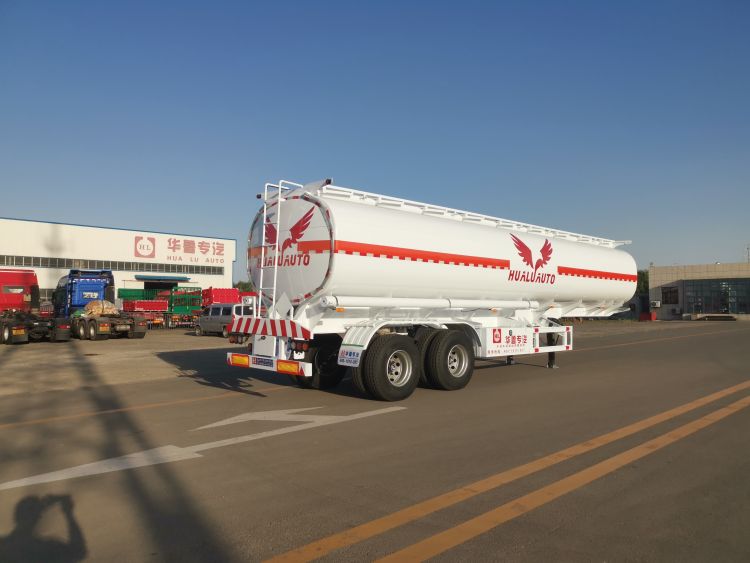
From a depot in the Jebel Ali Free Zone, a UAE chemical distributor moves industrial liquids — sulfuric acid, caustic soda, solvents, and base oils — to factories and refineries across all seven emirates. For eight years the fleet ran eight single-compartment tankers, and for eight years the same three costs climbed with the summer heat: a 45-minute wash-and-purge between every product change, trucks that ran 32% of their kilometres empty because a small order could not fill a whole tank, and three rejected loads a quarter when residual product from a previous run contaminated a fresh delivery. In July, when tarmac temperatures pass 55°C, the cleaning bay became the fleet's real bottleneck — the point where the same trailer sat idle while the order board backed up.
The rejections were the costliest, because a contaminated load of food-grade solvent or pharma-precursor acid is not just a lost delivery — it is a disposal event and a customer's production line held up. The problem is the single-compartment design itself: every product wants its own tank, and every switch wants a clean. The same contamination-control logic that matters for liquids shows up across Hualu's tank range, including Hualu's tank trailers in Kazakhstan, which eliminated winter condensation entirely by sealing the environment inside the tank.
The distributor's transport director shortlisted three manufacturers and chose Hualu on two criteria: the tank metallurgy and the compartment design. Each Hualu tanker is built from 316L stainless steel welded to a zero-defect standard — the same full-penetration, post-weld-inspected joining documented in Hualu's Lowboy deployment for an Indian heavy-transport operator — and is split into four independent 8,000-litre compartments with dedicated manholes and bottom valves. That means one tractor can deliver four different products on a single run, and a compartment is cleaned only when its product family changes. Six Hualu multi-compartment tankers were delivered in 40 days, in time for the summer order peak.
By August 2026, the six Hualu multi-compartment tankers had completed a full summer quarter. The numbers the transport director now reports to the board:
| Metric | Single-Compartment Fleet (Baseline) | Hualu Multi-Compartment Fleet | Change |
|---|---|---|---|
| Changeover / cleaning time per switch | 45 min | 16 min | -64% |
| Deliveries per truck per day | 3 | 5 | +67% |
| Contamination load rejections (per quarter) | 3 | 0 | -100% |
| Empty / deadhead return km | 32% | 18% | -44% |
| Partial loads (under 60% capacity) | 38% | 9% | -76% |
| Cleaning & downtime cost (monthly) | AED 42,000 | AED 15,000 | -64% |
| Trailer out-of-service days (month) | 5 | 1 | -80% |
| Products carried per single trip | 1 | 4 | +300% |
The two figures that changed the P&L most were the changeover time and the empty miles. Cutting the wash-and-purge from 45 to 16 minutes does not just save cleaning labour — it turns the cleaning bay from a queue into a pass-through, which is what lifted each truck from three to five deliveries a day. And because one multi-compartment tanker can serve four customers in one run, the fleet's empty return kilometres fell from 32% to 18%, so the same diesel now moves revenue freight in both directions. It is the same "remove a handling step, recover the time" effect seen in Hualu's Curtain Side trailers in Poland, where warehouse turnaround fell 45%.
A single-compartment tanker treats every product switch as a contamination risk that must be washed away before the next load. A multi-compartment tanker separates products physically, so the wash is only needed when the product family changes — and sometimes not even then. The 316L stainless shell matters just as much as the partition: a smooth, passivated surface resists carry-over and rinses clean in a fraction of the time a mild-steel liner takes. In the Gulf's heat, where a solvent residue left to bake in a parked tank becomes a bonded film, that material difference is the difference between a 16-minute rinse and a 45-minute chemical purge.
Chemical distribution in the GCC is built on small, frequent, high-value deliveries to a dense grid of downstream plants. The operator who wins is not the one with the biggest tank but the one who moves the most product per tractor per day without contamination. The UAE case shows that the right tanker converts the two things that used to cap utilization — cleaning time and empty miles — into the two things that drive it.