

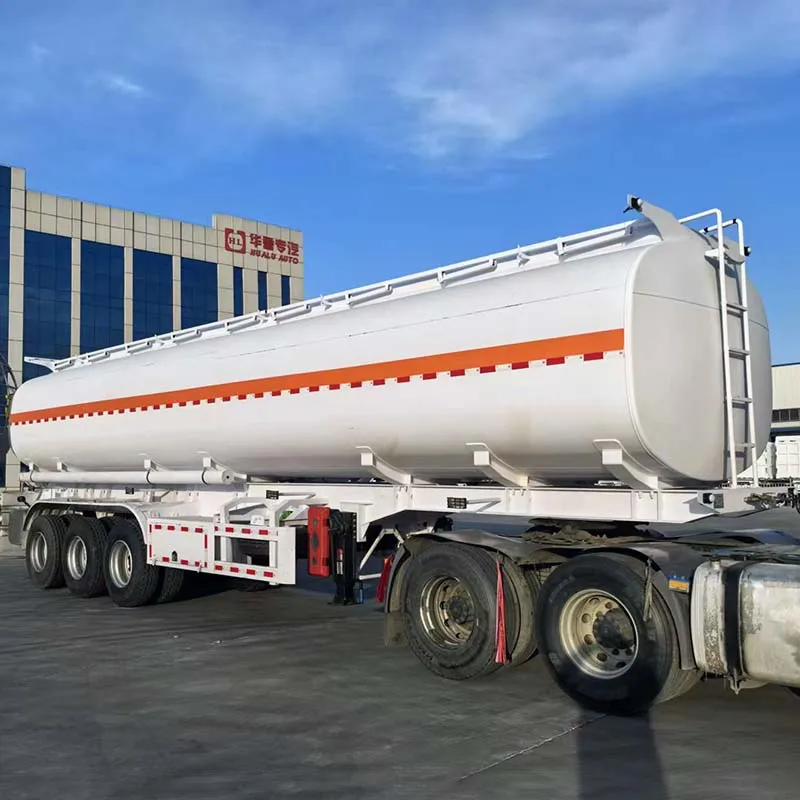
On the rugged N1 highway between Cape Town and Johannesburg, a Hualu 3‑axle 60CBM tanker glides through the Karoo heat. For Piet, a Gauteng fleet owner, these trailers have cut spillage by 90% over two rainy seasons—anti‑roll baffles and low‑centre design keep 60,000 litres of diesel stable through mountain passes and crosswinds. Drivers report less fatigue thanks to air suspension that soaks up washboard gravel. Maintenance logs show brake‑pad life extended 40%, and each unit delivers an extra 1,200 litres per trip via precise calibration. With 80 units now running 24/7 to northern copper mines, Piet’s monthly net margin has climbed 18%—not from hauling more, but from losing less, stopping safer, and servicing faster at local workshops. For South African hauliers, this tanker is a bankable partner in a volatile market.
1. Uncompromising Safety Across 80 Vehicles
On Hex River Pass with 6% gradients and frequent runaway trucks, Piet’s 80 drivers once dreaded every descent. Internal baffles and a low centre of gravity stabilise each load. During a squall last November, a rear‑tyre blowout at 80 km/h triggered split‑circuit brakes and electronic stability—the rig stayed straight, scrubbing speed without jackknifing. Fleet‑wide spillages fell from five per trailer per year to just one minor seepage over two seasons. Driver Thabo, who lost a colleague to a rollover in 2022, now finishes 12‑hour shifts calmly. Side‑impact beams and emergency shut‑offs have made high‑risk routes routine for all 80 crews.
2. Rock‑Solid Stability on Every Surface
From corrugated R355 gravel to undulating N12 tar, the three‑axle air suspension with self‑levelling bellows kills chatter and neutralises slosh—even with 60,000 litres aboard. Piet recalls a crosswind near Beaufort West that blew over two rival tankers; his 80 units, with low tandem axles and wide tyres, stayed planted. On off‑ramps, roll‑stiffness prevents belly roll. The payoff: confident overtaking, shorter wet‑tar stopping, and zero foaming at unloading—every drop reaches the customer’s tank, shift after shift.
3. Precision Calibration Delivers Extra Payload
Each of the 80 trailers now hauls 1,200 more litres per trip, thanks to optimised compartments and ultrasonic fill sensors. The metering system fills four chambers to the legal maximum without overtopping—eliminating fines and loss. On the 1,400‑km Joburg‑Northern Cape round trip, that adds 96,000 litres weekly across the fleet. Baffle design reduces surge‑induced weight shift, so Piet runs at 56‑tonne GCM without overload penalties. He hasn’t paid an overweight fine in eight months, while competitors lose R2,000 per stop—engineering that turns every litre into billable cargo, multiplied by 80.
4. Low‑Maintenance Durability Scaled
Piet’s Krugersdorp workshop now sees compounded savings. Brake‑pad life stretched 40%—from 45,000 to over 63,000 km per trailer—even on Drakensberg descents. Forged aluminium rims and corrosion‑proof piping resist coastal salt; modular valve blocks swap in under 20 minutes, a lifesaver in remote Upington. The CAN‑bus alerts to worn kingpins or air leaks before breakdowns. Fleet‑wide unplanned downtime fell from 11 days per trailer per year to just 3—saving hundreds of operational days. Local suppliers stock 90% of consumables thanks to ISO fittings, and Piet’s insurer gave a 7% premium discount on all 80 policies.
5. Bankable Partner for Profit Growth at Scale
Quarterly numbers tell the story: 80 tankers running 24/6 to farms and mines pushed net margin from 14.2% to 18.7%—not from higher rates, but less waste, fewer penalties, lower maintenance, and more payload. The 1,200‑litre bonus adds R18,000 monthly per vehicle; across 80, that’s R1.44 million extra each month. Reduced brake and tyre wear saves another R4,500 per trailer monthly—totalling R360,000. Add 90% spillage reduction sparing environmental fines, and annual savings exceed R22 million for the fleet. Strong resale value, certified by a local financier, secured a revolving credit line for expansion. These trailers are no longer expenses; they are collateral‑backed engines that stabilise cash flow even when fuel spikes. For South African hauliers, safety and stability are not checkboxes—they are the foundations of profit on every kilometre, and 80 reliable partners make all the difference.