

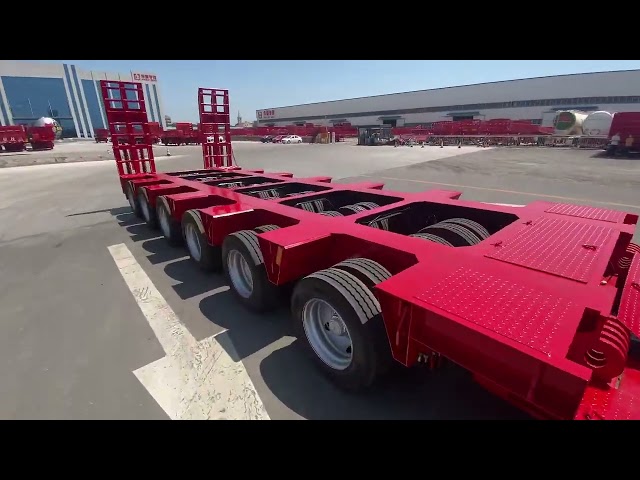
In the Pilbara headquarters of a Port Hedland-based iron ore haulage contractor, the company's maintenance ledger had a red line drawn across it — literally, in red marker — at the row labeled "HYD CYL REPLACEMENT." For six consecutive years, the number in that row had been 26. Twenty-six hydraulic cylinder replacements per year, across 16 end-tipper trailers. One replacement every 14 operating days, like a metronome. The cost was not just the cylinders — $4,200 each, installed, plus 18–36 hours of downtime per failure at a roadhouse 380 kilometres from the nearest hydraulic repair facility in Karratha. The real cost was the unpredictability: a cylinder that failed on day 11 of a 14-day haulage contract meant four days of penalty clauses, re-routed loads, and phone calls to clients that began with the same six words: "We've had another cylinder go."
"I used to budget for 26 failures a year," the company's managing director told an industry roundtable in Perth. "That was the number. We didn't question it. The Pilbara breaks things — that's what everyone tells you. What I didn't realise, until a competitor running Hualu trailers showed me his maintenance log with zero cylinder replacements in 18 months, was that the Pilbara wasn't breaking our trailers. Our trailers were breaking themselves. The hydraulic system was designed in a factory that had never seen 50-degree heat or 3-micron dust."
The Pilbara's iron ore dust is not ordinary dirt. It is hematite and magnetite particulate — iron oxide — with a Mohs hardness of 5.5–6.5, comparable to glass. The finest fraction, measuring 2–8 microns (PM2.5–PM10), is small enough to remain suspended in the air for hours after a truck passes and fine enough to infiltrate gaps smaller than a human hair. Standard hydraulic cylinder wiper seals are rated to exclude particles down to approximately 10–15 microns. In the Pilbara, that 5-micron gap between what the seal stops and what the dust delivers is the difference between a cylinder that lasts 15 years and one that fails in 14 days.
The second factor is heat. At 50°C ambient — and road-surface temperatures exceeding 70°C — standard ISO VG 46 hydraulic oil thins to approximately 12–14 cSt at operating temperature, below the 15 cSt minimum that most hydraulic pumps and cylinders require for adequate film strength. When the oil film fails, metal-to-metal contact occurs inside the cylinder bore. Add 3-micron abrasive dust particles to that metal-to-metal contact, and the cylinder bore scores and leaks within weeks — not years.
The combination is multiplicative: dust ingress creates surface roughness; low-viscosity oil fails to maintain a protective film over that roughness; the resulting metal-on-metal wear generates additional particulate, which accelerates further wear. A cylinder that would last 20,000 cycles in a temperate climate fails in 600–800 cycles in the Pilbara. That is not a maintenance problem. That is a design problem.
In August 2024, the company took delivery of 16 Hualu Heavy-Duty End Tipper Trailers, each configured with a Pilbara-specific engineering package:
| Metric | Conventional Fleet (16 units, 2018–Jul 2024) | Hualu Fleet (16 units, Aug 2024–May 2026) | Change |
|---|---|---|---|
| Hydraulic cylinder failures/year | 26 | 0 | -100% |
| Mean time between cylinder failures | 14 days | ~660+ days (ongoing) | +4,600% |
| Annual hydraulic maintenance cost | $218,000 | $63,000 | -71% |
| Fleet availability (uptime) | 78% | 97% | +19 pp |
| Unplanned downtime (hrs/year) | ~624 | ~48 | -92.3% |
| Tonnes moved per operating day | 3,800 | 5,100 | +34% |
| Year 1 total cost of ownership | $1.47M | $0.91M | -38% |
The headline: Zero hydraulic cylinder failures in 22 months — across 16 trailers, in the most punishing environment for hydraulic equipment in the Southern Hemisphere. The fleet's availability rate — the percentage of time a trailer is mission-ready — rose from 78% to 97%, effectively adding the output of 3 additional trailers without purchasing a single extra unit. "The maintenance ledger still has a red line," the managing director said. "But now it's at the bottom, under the total. That's the number my accountant wants framed."
The same engineering philosophy — design for the actual operating environment, not the laboratory specification sheet — drove Hualu's Turkish Curtain Side deployment, where side-access geometry eliminated dock bottlenecks, and the Kazakhstan Curtain Side fleet that withstood Central Asian winter conditions that had defeated standard curtain materials. Across three continents and three entirely different failure modes, the principle is identical: when you stop fighting the environment with standard equipment and start engineering for it, the environment stops winning.
Hualu maintains an Australian after-sales hub in Perth (Welshpool), with 24-hour parts dispatch to the Pilbara region.