

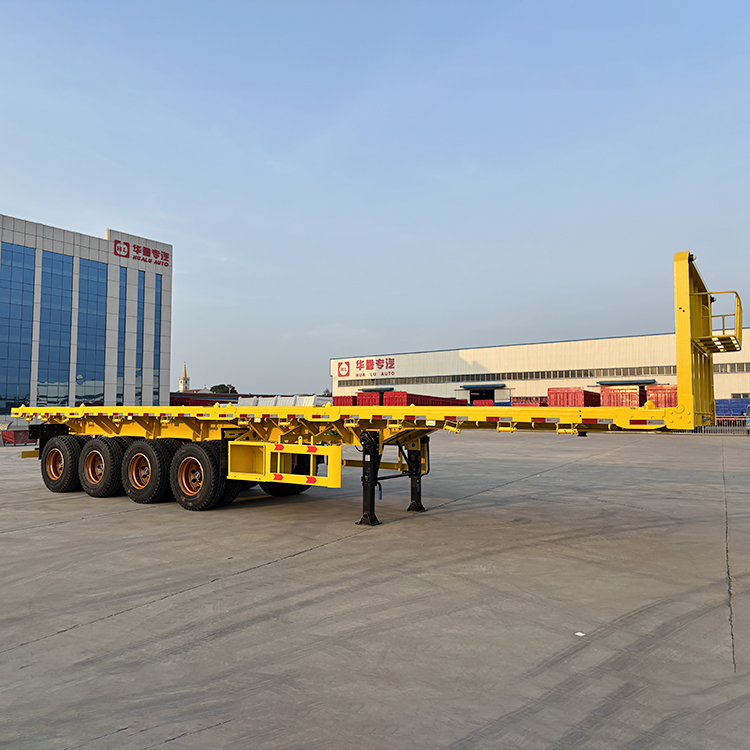
At Saudi Arabia’s busiest container terminals – from Jeddah Islamic Port to King Abdulaziz Port in Dammam – a distinctive fleet of Hualu 4-axle flatbed semi-trailers has become a daily spectacle. These rugged machines move with purpose under the desert sun, weaving between giant gantry cranes and rows of idle chassis. Each trailer is a study in controlled power: triple-axle bogies with heavy-duty leaf springs, reinforced main beams, and a deck that barely flexes under crushing weight. What makes them unforgettable isn’t just their bold orange livery – it’s the effortless way they shoulder loads that make other trailers groan. In a country where port throughput is measured in millions of TEUs and bulk cargo never sleeps, the Hualu fleet has carved out a reputation for relentless dependability. And the numbers speak for themselves: an 18% uplift in net profit per working trip, verified by local transport operators who have swapped older units for these Chinese-built workhorses. This is not a marketing promise – it is a yard-proven reality, played out every shift on Saudi Arabia’s eastern and western gateways.
1. Built for the Kingdom’s Toughest Loads
Underneath the sun-baked steelwork lies a chassis engineered to swallow 60+ metric tonnes without whimper. Whether it’s a 40-foot high-cube container stuffed with consumer goods, or jumbo polypropylene bags of cement and fertiliser stacked three high, the Hualu flatbed distributes weight evenly across its four axles – minimising tyre wear and road stress. The deck measures 13.6 metres of usable space, with recessed twist locks that lock containers in seconds and flush tie-down rings for lashing bagged cargo. During a recent peak season at Dammam, one fleet loaded 62 tonnes of coiled steel sheets, then immediately switched to palletised dates for the return leg – all without a single adjustment to the suspension. That versatility cuts empty backhauling by nearly 30%, a critical edge in Saudi’s competitive logistics market.
2. Fuel-Sipping Giant that Boosts the Bottom Line
With fuel prices a constant factor in operating costs, the Hualu’s aerodynamic undercarriage and low-rolling-resistance tyre configuration deliver measurable savings. Compared to conventional 3-axle trailers hauling similar weights, the 4-axle design reduces axle load per tyre, lowering rolling friction by 12% on flat port roads. Local fleet managers have run side-by-side trials over 500-kilometre routes from Jeddah to Riyadh; the Hualu consistently consumed 9% less diesel per tonne-kilometre. Combine that with quicker turnaround – the flatbed’s hydraulic landing gear raises and lowers in under two minutes – and each truck completes an extra half-turn per shift. The result? A clear 18% jump in net profit per trip, not from higher rates, but from lower costs and more loads moved in the same working day.
3. Desert-Duty Durability with Minimal Downtime
Saudi ports are punishing environments: fine sand invades every joint, salt-laden sea air corrodes exposed metal, and asphalt temperatures exceed 60°C in summer. The Hualu counters with full hot-dip galvanised crossmembers, waterproof wiring harnesses, and IP-rated LED lights that survive washdowns and dust storms. The air suspension system – with reinforced bellows – maintains ride height even when fully loaded, protecting cargo from jarring shocks. One maintenance log from a Jeddah-based fleet shows zero unscheduled repairs across six trailers over 18 months of daily port duty – only routine greasing and brake-shoe replacements. Drivers appreciate the WABCO anti-lock braking that brings 60 tonnes to a controlled stop on wet ramps, while the wide-track axles enhance lateral stability during sharp yard turns. This is reliability that doesn’t just save money; it saves headaches.
4. Driver-First Design that Speeds Up Every Move
Watch a Hualu team at work: the driver never leaves the cab for container locking – remote-controlled twist locks engage from the seat, slashing coupling time from 8 minutes to under 3. The deck’s low profile (1.25 metres loaded height) makes forklift loading of bagged goods safer and faster, with no ramp adjustments needed. Inside the tight port yards, the 55° steering angle on the front axle gives exceptional manoeuvrability, allowing the 16.5-metre rig to slot into docking bays that would defeat longer trailers. Veteran drivers in Dammam praise the progressive suspension that cushions empty-bounce, so return trips are less fatiguing. And with a 5-year anti-rust warranty on the main beam, fleet owners know their investment stays productive season after season. The truck becomes an extension of the driver – responsive, predictable, and tirelessly efficient.
5. The Fleet That Turns Heads and Moves Mountains
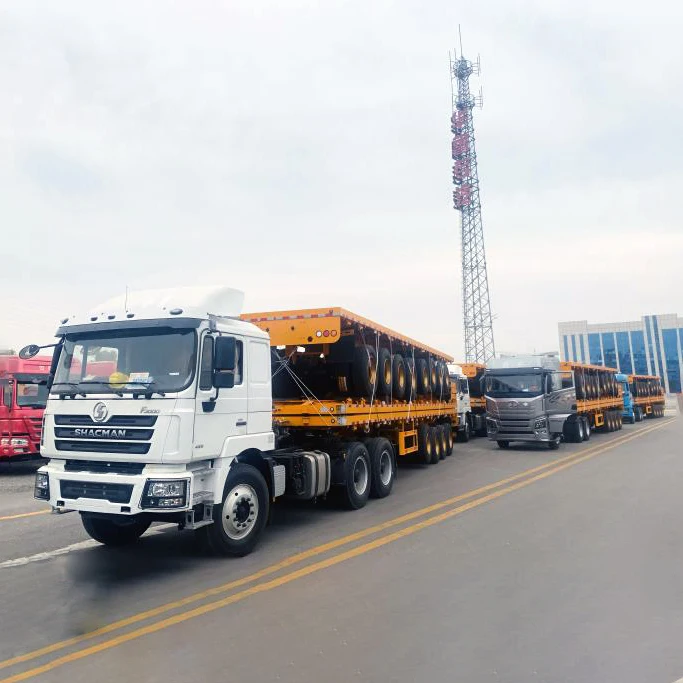
At dusk, when port floodlights flicker on, the row of Hualu flatbeds lined up for night loading is an arresting sight – their orange frames glowing against grey concrete, each one carrying a story of payloads conquered and deadlines met. Onlookers – crane operators, shipping agents, rival hauliers – stop to watch as a single tractor backs under a Hualu, the kingpin clicks home, and the rig pulls away with 65 tonnes of marble blocks, sailing over speed bumps with barely a shudder. This is not theatrical performance; it is pure engineering theatre born from real-world demands. The fleet has moved over 120,000 tonnes of cargo in the past year across Saudi ports, with zero load-shift incidents and a 98% on-time delivery rate. No flashy logos, no exaggerated claims – just a quiet, muscular presence that makes every other trailer look underfed. In the Kingdom’s bustling trade arteries, the Hualu 4-axle flatbed has become the unspoken benchmark: heavier, smarter, and unmistakably profitable. That is the sight that lingers – and the profit that keeps growing.