

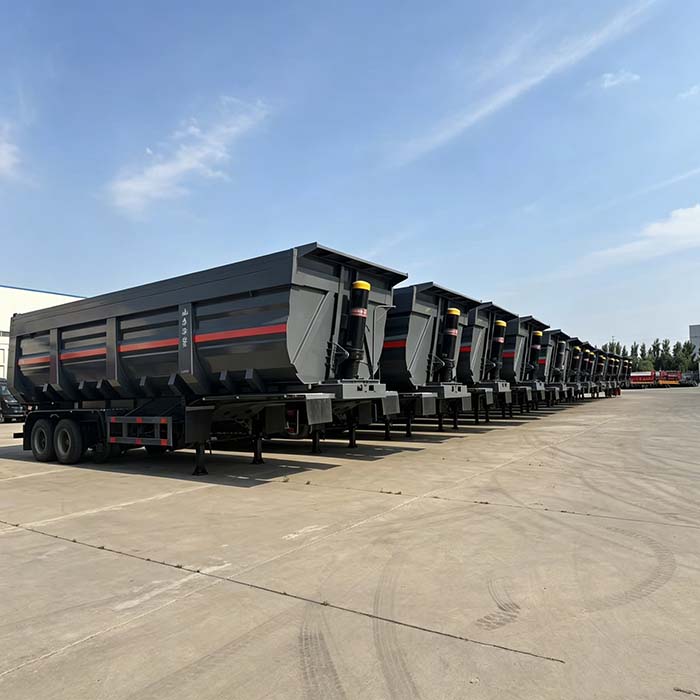
Guinea’s mining and construction sectors don’t run on standard specs. They run on machines that survive the daily grind of high-density ore, rutted laterite roads and remote sites with limited backup. Most trailers on the market fail to keep up, leaving operators stuck with these costly headaches:
Payload That Never Adds Up: Hauling bauxite or overburden means you need to move 100+ tons per trip just to hit your targets. Many off-the-shelf tippers buckle under sustained heavy loads, bending frames or blowing out suspension parts before they even hit 5,000 hours.
Downtime That Kills Your Margins: Unpaved, potholed, rain-soaked haul roads shake every part of the trailer apart. Frequent breakdowns on remote routes leave trucks stranded for days, missing shift targets and piling up idle labor costs.
Sticky Payload, Wasted Profit: Wet laterite and damp ore cling hard to the trailer bed. Operators lose 5–10% of their load every trip to stubborn residue, wasting fuel, time and money on manual shoveling just to get the trailer empty.
No Parts, No Progress: High-end European-spec trailers often come with overcomplicated, proprietary components. When something breaks, you can’t find the spare part locally, and waiting weeks for a shipment from overseas brings your whole operation to a halt.
Rollover Risk on Soft Ground: Tipping 100+ tons on loose, uncompacted mine ground is a constant gamble. A poorly balanced tipper can tip over in seconds, writing off a trailer, injuring crews and stopping site work entirely.
We didn’t just tweak a standard tipper for this market. We engineered it from the ground up to solve the exact pain points Guinea throws at your fleet:
100–120 Ton Payload, No Compromises: The full high-tensile steel frame is reinforced at every high-stress weld and crossmember, built to carry maximum tonnage shift after shift without twisting or cracking.
Built to Eat Rough Roads for Breakfast: Extra ground clearance keeps the undercarriage clear of sharp rocks and deep ruts. Heavy-duty bogie axles and overspec suspension soak up brutal terrain, so you spend less time in the shop and more time on the haul.
Fast, Clean, Controlled Discharge: Large-bore hydraulic hoist cylinders lift the full load smoothly and steadily. The optimized U-shaped bed design lets sticky laterite and damp ore slide right out, cutting unloading time and leaving almost zero residue behind.
Field-Serviceable, No Fancy Tools Required: We skipped the overcomplicated proprietary parts. Every hydraulic, brake and suspension component is chosen for easy repair with standard tools and local expertise, so your team can fix issues on-site instead of waiting for a specialist.
Stable Tipping, Even on Soft Ground: The low-slung loaded center of gravity and carefully calibrated rear pivot point keep the trailer balanced through the entire lift cycle, drastically cutting rollover risk on uneven, unimproved ground.
Rated Payload: 100 – 120 Metric Tons
Trailer Configuration: 3 Axle Heavy-Duty Rear Tipping Semi-Trailer
Chassis: High-tensile low-alloy steel main beams, fully reinforced at all load points
Body Style: U-shaped or rectangular dump body, optimized for material flow
Body Material: Premium wear-resistant high-strength steel, hardened for ore and abrasive material
Typical Body Dimensions: 9–12m (L) x 2.5–3m (W), customizable to site hauling needs
Tipping System: Multi-stage large-capacity rear-mounted hydraulic hoist
Maximum Tipping Angle: 45–50 degrees, engineered for full, clean discharge
Suspension: Heavy-duty reinforced mechanical bogie suspension
Braking System: Dual-line pneumatic brake system, built for heavy-load stopping power
Tailgate: Reinforced high-tensile tailgate, with manual or optional hydraulic opening
Pre-Tip Site Check: Always position the trailer on the firmest, most level ground available. If you have to tip on soft ground, spread steel plates or hard mats under the rear axles first to prevent sinking.
Secure the Load Zone: Make sure the area behind the trailer is completely clear of personnel, equipment and overhead obstacles. Set the tractor parking brake fully before starting any lift.
Smooth, Steady Lift: Engage the PTO and raise the bed at a controlled, even pace. Never slam the hydraulic lever or try to “jiggle” the trailer to dislodge stuck material — that’s the fastest way to bend the frame or blow a seal.
Full Discharge, No Rush: Let the material flow out naturally. Once the bed is empty, do a quick visual check from the side to confirm no large chunks are left wedged in the corners.
Lower and Lock Down: Lower the bed all the way until it rests firmly on the chassis locks. Disengage the PTO, secure the tailgate and do a quick walkaround before pulling away.
Daily Pre/Post-Shift Checks: Walk the full frame every shift to spot new cracks or stress marks around welds and the tipping hinge. Check hydraulic fluid levels and inspect every hose for fresh leaks. Confirm all tires are at the correct pressure and brakes hold fully before heading out on a haul.
Weekly Service: Grease every pivot point, kingpin, suspension joint and tipping hinge thoroughly. Guinea’s red dust gets into every moving part — skipping grease leads to premature wear and seized parts. Wipe down all exposed hydraulic cylinder rods to scrub off dust and grit that would otherwise score the seals.
Every 250 Operating Hours: Re-torque every critical bolt on the subframe, suspension mounts and body fasteners. The constant vibration on rough roads loosens bolts fast, and a loose bolt is the first step to a broken frame. Do a full structural check of the main beams and crossmembers for any sign of bending or deformation.
Post-Rain / Post-Mud Washdown: After every run through mud or wet laterite, pressure wash the entire undercarriage, suspension and hydraulic components. Leaving acidic red mud caked on metal is the fastest way to cause hidden corrosion that will eat through your frame in months.
Annual Full Inspection: Have a qualified technician run a full check of the hydraulic system, test all brake lines and inspect critical high-stress weld points. For fleets running 24/7, schedule this inspection every 6 months to catch issues before they turn into costly breakdowns.