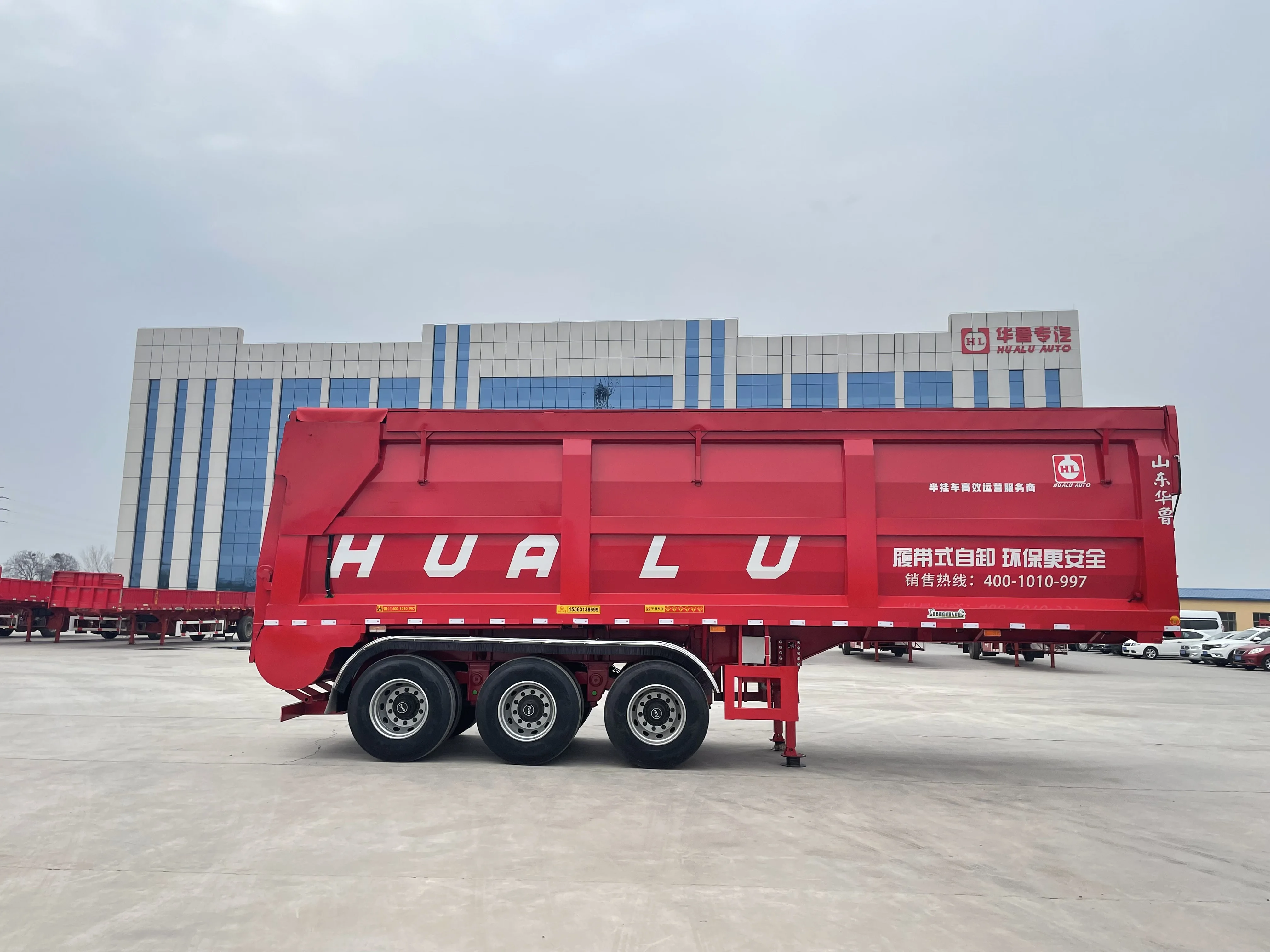
Client Pain Points: The Hidden Costs That Eat Your Profits
Traditional tipping trailers create a cascade of inefficiencies and risks for bulk material haulers:
- Lost Time = Lost Revenue: The tipping cycle is inherently slow. Aligning, raising the bed, waiting for material to slide (or not), and lowering takes precious minutes. Multiply that by dozens of loads per day, and the cumulative downtime is staggering.
- Incomplete Unloading & Cargo Waste: Sticky, moist, or cohesive materials (wet sand, clay, certain ores) cling to the trailer bed. You lose 5-15% of your payload as residue, which either requires costly manual labor to shovel out or is simply abandoned, directly impacting your profit per load.
- Site Access & Safety Limitations: Tipping requires firm, level ground. Soft ground, uneven terrain, or confined urban construction sites become inaccessible or hazardous, forcing you to reject profitable jobs or create unsafe working conditions with a high risk of trailer rollover.
- Lack of Precision & Spillage: Dumping creates large, uncontrolled piles. This often requires secondary machinery (like a wheel loader) to spread or move the material, adding another layer of cost and delay. Spillage around the site creates cleanup work and safety hazards.
- High Wear & Tear: The violent tipping action and the impact of material slamming against the raised bed put immense stress on the trailer's hydraulics, chassis, and body, leading to more frequent and expensive repairs.
Product Highlights: The Belt Unloading Advantage
Our Belt Unloading Semi-Trailer is engineered to solve these core financial and operational pains:
- Speed That Pays: Continuous conveyor-belt unloading is up to 70% faster than the stop-start tipping cycle. Get back on the road for your next load sooner.
- Get Paid for 100% of Your Load: The belt scrapes the bed clean, ensuring near-total discharge of even the stickiest materials. What you haul is what you deliver—and get paid for.
- Unload Anywhere, Safely: Operate with confidence on soft soil, slopes, or tight spaces. Ground-level discharge with a stable, low center of gravity eliminates the risk of rollover.
- Precision Placement: Control the flow. Deposit material in controlled windrows or directly into trenches, hoppers, or alongside other trucks with minimal spillage and no re-handling.
- Built Tougher for Lower TCO: Designed for continuous operation with fewer high-stress moving parts than a tipping mechanism, leading to less downtime and lower long-term maintenance costs.
Correct Operating Procedure:
- Position: Drive to the dump point and extend/lower the discharge conveyor to the target area.
- Engage: Connect the hydraulic system to the tractor's PTO and apply the parking brake.
- Unload: Start the conveyor belt, controlling the speed for an even flow.
- Finish: Once empty, stop the belt, retract the conveyor, and secure for travel.
Essential Maintenance Guide:
- Daily: Inspect belt for damage, check tension, and look for hydraulic leaks.
- Weekly: Lubricate all rollers and idlers; inspect the scraper blade.
- Post-Abrasive Loads: Thoroughly clean the belt and frame to remove grinding dust.
- Periodic: Have a professional inspect the hydraulic drive and gearbox every 500 hours.