

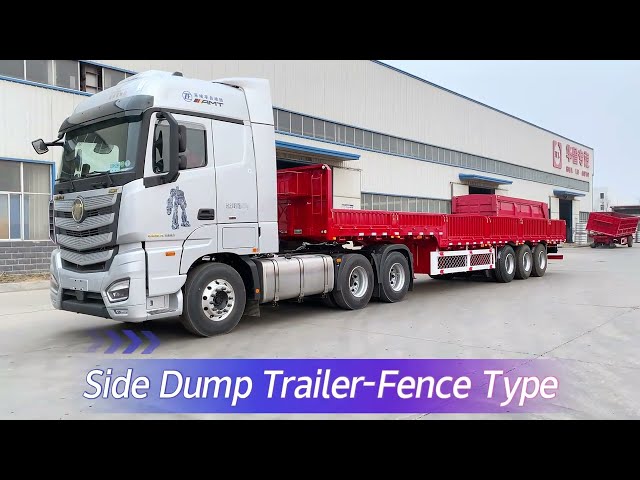
Kuantan‑based Majestic Logistics had spent years hauling sand and quarry stone to construction sites across Pahang, building a reputation for reliability. But beneath that hard‑won name, its ageing rear‑dump trailer fleet was quietly bleeding money, morale, and safety. Every delivery on uneven, rain‑soaked ground became a high‑stakes gamble—and the house was winning. By early 2026, after one too many near‑misses, the company made a radical decision: scrap every rear‑tipper and replace them with Hualu Fence Side Dump Trailers. That single move would cut waste, slash costs, and quite literally save the business.
1. The Daily Gamble of Tipping High
Majestic’s drivers dreaded the unloading routine. On a typical site—muddy laterite, sloped access roads, or compacted gravel—they had to position the rear‑dump trailer precisely, then raise the heavy bed to a steep angle. One soft patch, one over‑loaded bucket, and the entire payload would spill sideways, burying tyres and blocking the stockpile. Clean‑up crews then spent 20 to 30 minutes per stop shovelling spilled material back into piles, while the truck’s engine idled and fuel burned for nothing. Hydraulic rams groaned under uneven weight; seals blew, rods bent, and pumps failed with alarming regularity. Each repair ate into already thin margins, and rising diesel prices turned every extra minute of idling into a slow bleed. Drivers joked bitterly that they spent more time with shovels than behind the wheel.
2. A Muddy Wake‑Up Call
The breaking point came on a rainswept project site west of Kuantan. A veteran driver, trying to dump a full load of aggregates on a slight incline, raised the rear bed as usual. The centre of gravity shifted, the trailer lurched, and in seconds it toppled sideways into the mire. The driver suffered a shoulder injury; the twisted wreck took two days to recover and repair. Operations ground to a complete halt for 48 hours, forcing Majestic to pay penalties to its contractors and apologise for missed deadlines. Insurance premiums jumped, safety audits flagged the fleet as high‑risk, and several crew members threatened to walk off the job rather than risk another rollover. That accident exposed the fatal flaw: rear‑tipping was inherently unsafe on real‑world sites, no matter how skilled the driver.
3. The Hualu Fence Side Dump Solution
In early 2026, Majestic replaced its entire fleet with Hualu Fence Side Dump Trailers. Instead of lifting the whole bed, these units discharge through side‑opening gates, using a controlled hydraulic system that tilts the body only a few degrees sideways—just enough to let material flow out gently at ground level. The centre of gravity barely shifts, so the trailer stays planted even on wet clay or loose gravel. Drivers now pull up alongside stockpiles, engage the side‑dump mechanism, and watch sand or stone glide out without any backing, repositioning, or steep angles. Unloading time, including cleanup, plummeted from nearly an hour per stop to barely 30 minutes—almost half the previous time. For the first time in years, drivers finished their shifts without white knuckles, and the workshop stopped ordering emergency hydraulic parts.
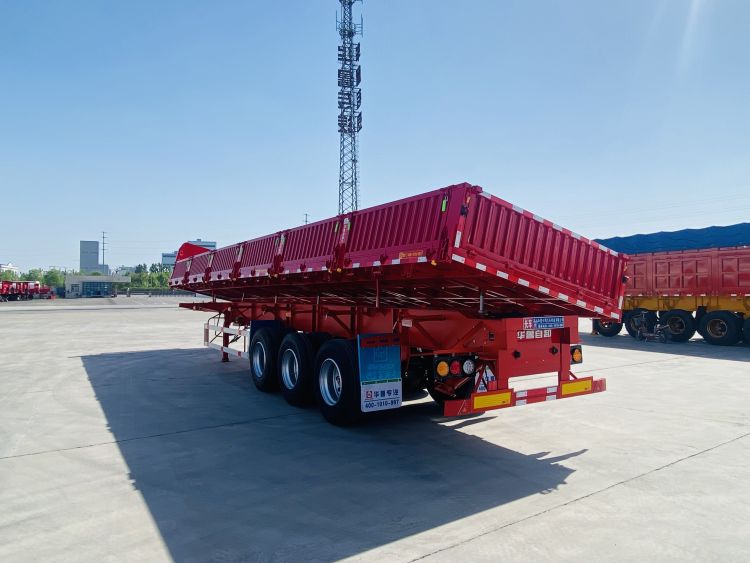
4. Tangible Turnaround in Just Three Months
Within three months, the numbers told an undeniable story. Fuel consumption dropped 8%—shorter unloading cycles and far fewer repositioning manoeuvres cut engine load dramatically. Maintenance costs fell by a quarter, as hydraulic rebuilds and suspension overhauls became rare. With the same workforce, Majestic added two extra trips per day, boosting monthly revenue and winning back contractors who had grown wary of delays. The injured driver returned to work after recovery and now trains new hires on the Hualu system, emphasising safety and speed. For Majestic Logistics, the new fleet did not just move materials—it saved the business, restored pride in the job, and secured long‑term contracts with major developers. The gamble on rear‑dump trailers is over; the future belongs to side‑dump efficiency.