
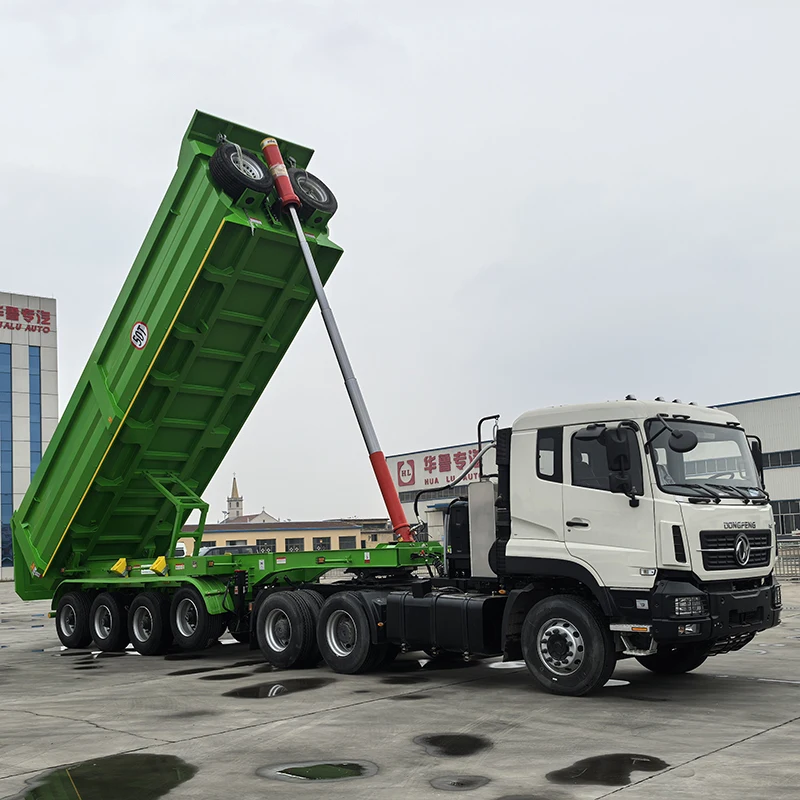
In the demanding logistics and construction environment of Saudi Arabia, HUALU rear-tipping semi-trailers have emerged as a highly efficient solution. Their unique design and robust features make them particularly well-suited to the Kingdom’s challenging operational conditions.
Lightweight yet Durable Construction
One of the standout advantages of HUALU trailers is their lightweight design. Using high-strength steel and advanced manufacturing techniques, these trailers offer a high payload-to-tare weight ratio. This means more cargo can be carried per trip without exceeding legal weight limits, directly improving fuel efficiency and reducing operational costs—critical factors in long-haul desert routes.
Fast and Reliable Unloading
The rear-tipping mechanism ensures rapid, safe unloading of bulk materials such as sand, gravel, construction debris, or agricultural products. Unlike side-tippers, rear-tippers eliminate the risk of vehicle instability or overturning on uneven ground. With a powerful hydraulic system, the trailer can lift and empty its load in minutes, drastically reducing downtime at job sites. This speed is especially valuable for time-sensitive projects like road construction or mining operations across Saudi Arabia.
Adaptability to Complex Road Conditions
Saudi Arabia’s terrain ranges from paved highways to rugged desert tracks and sandy wadis. HUALU rear-tipping trailers are engineered to handle this diversity. Features include:
Reinforced suspension systems that absorb shocks from rough terrain.
High-ground-clearance frames to avoid snagging on rocks or sand dunes.
Corrosion-resistant coatings to withstand extreme heat and abrasive sand.
Moreover, the rear-tipping design requires less lateral space than side-tippers, making it safer to operate on narrow or sloped construction sites. The low center of gravity during transport enhances stability on highways, reducing rollover risks.
For Saudi contractors and fleet operators, HUALU rear-tipping semi-trailers offer a winning combination: lightweight efficiency, fast unloading cycles, and rugged adaptability to desert and off-road conditions. These advantages translate directly into higher productivity, lower fuel consumption, and reduced maintenance costs—making them a smart investment for the Kingdom’s growing infrastructure and logistics sectors.