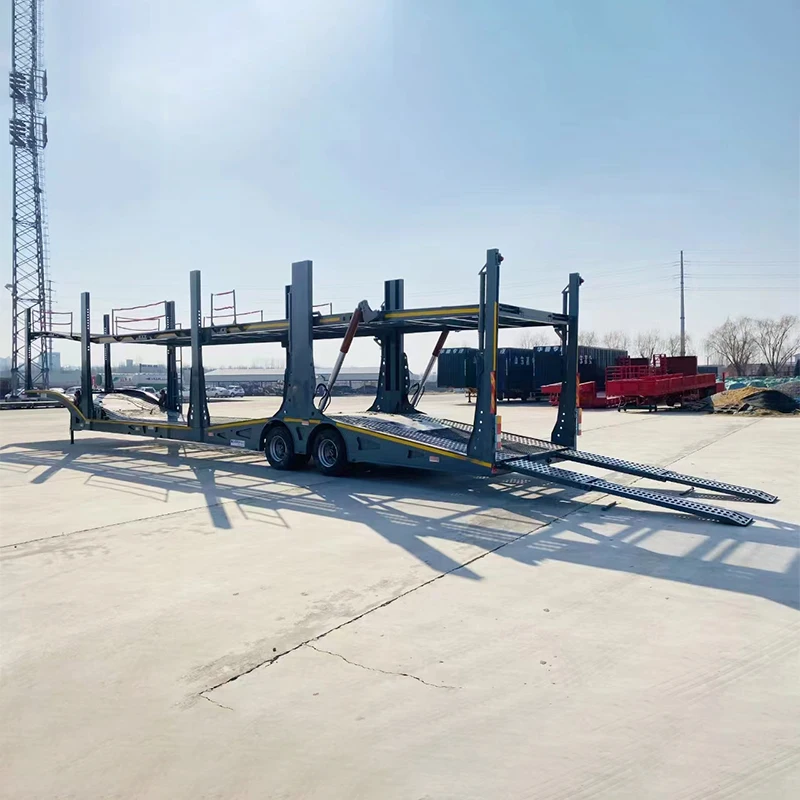
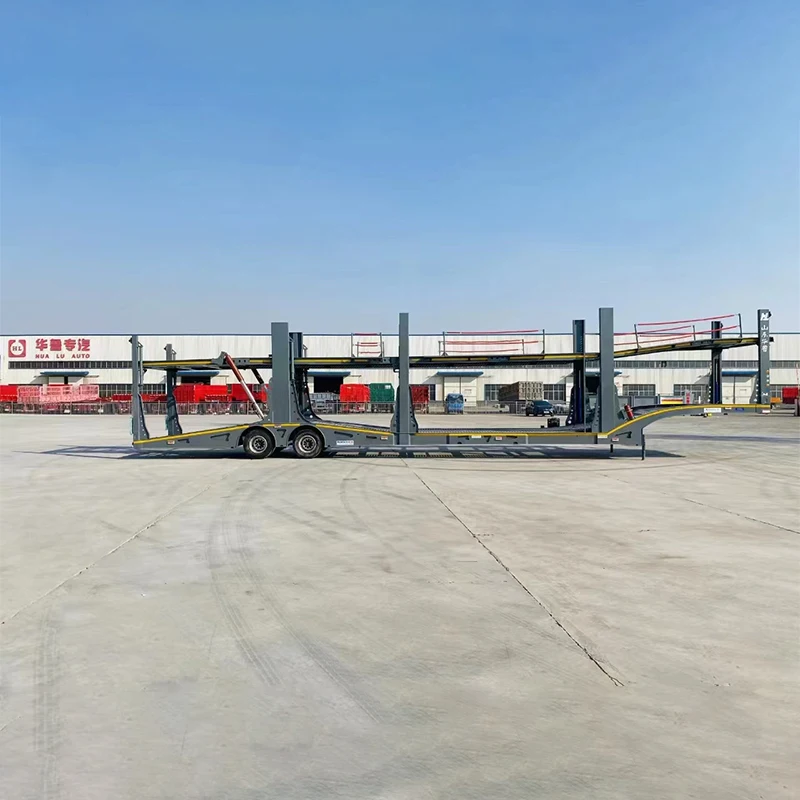
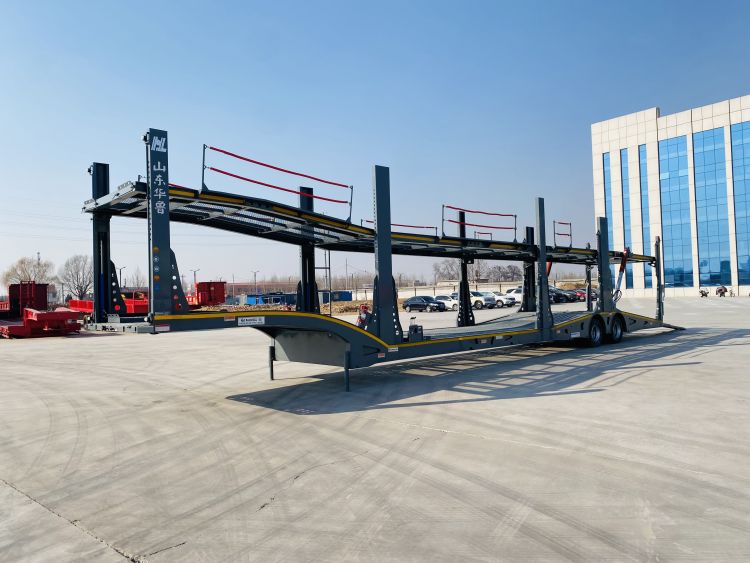
In the competitive vehicle transport industry, profit margins are defined by how many units you can move per trip. Our customizable 2-axle double-deck car carrier semi-trailers are engineered to safely transport 8-10 vehicles while maintaining a low center of gravity, ensuring stability on long-haul routes and maximizing your return on every mile.
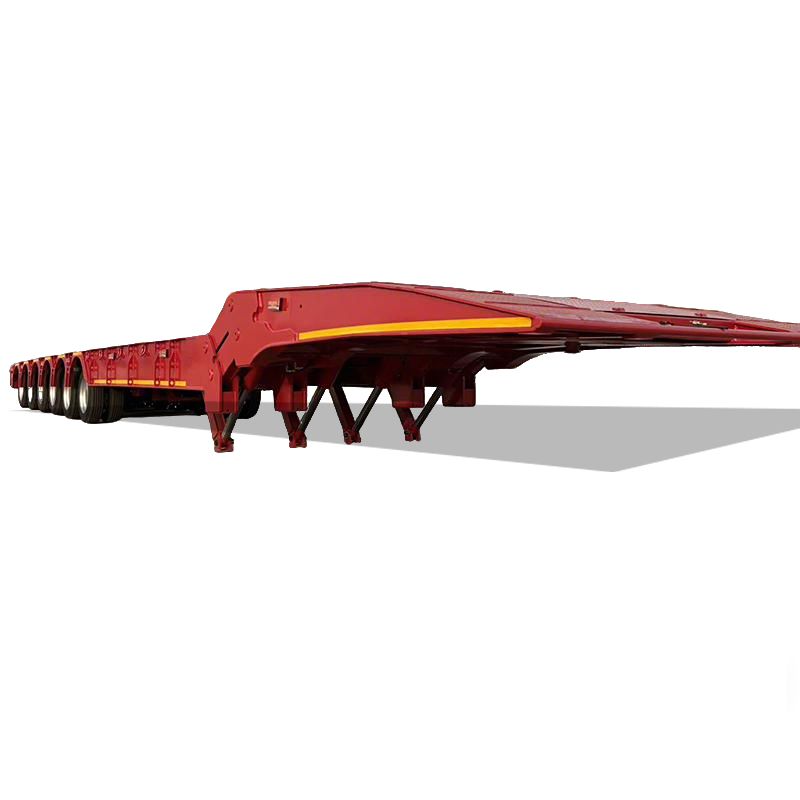
A South African mining logistics operator hauls dozers, excavators, and loaders from Durban and Richards Bay to open-pit mines in Mpumalanga and the Northern Cape. Its old lowboys took 45 minutes to load a machine, wore their decks out on tracked machines, and cracked frames on rough haul roads. Hualu lowboys with a hydraulic detachable gooseneck, reinforced deck, and high-tensile low-weld frame cut load time to 18 minutes and drove frame cracks to zero.
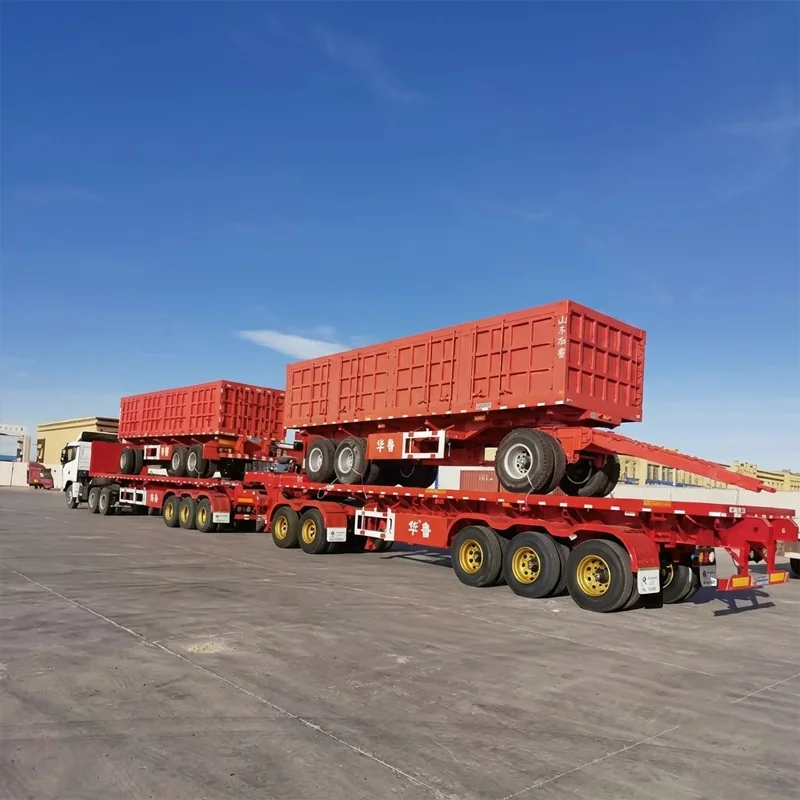
In Peru, a transport company needed to move bulk goods across long, demanding routes without burning profits. After testing, they ordered 80 Hualu Side Wall Drawbar Full Trailers. The lightweight body reduced fuel consumption. On every trip, lower weight meant less diesel, faster turnaround, and more payload. Across the fleet, operating costs dropped by 5%. Drivers liked the stable tracking and easy loading. Managers saw savings adding up daily. The trailers handled Peru’s coastal roads, highland routes, and dusty job sites. With 80 units in service, the fleet now delivers more while spending less. For Peruvian operators facing tight margins, Hualu Side Wall Drawbar Full Trailer is a practical, proven way to cut running costs and stay competitive.
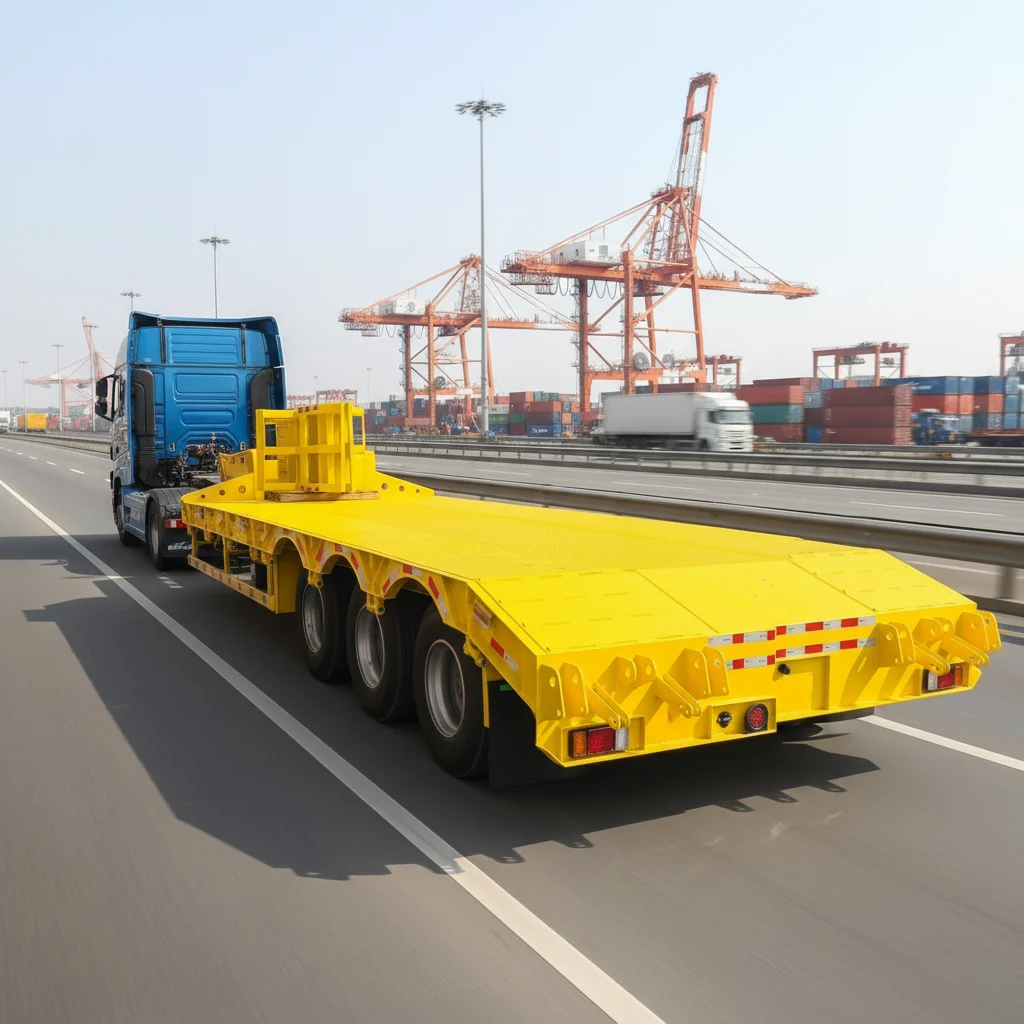
African roads demand equipment that can handle oversized cargo, navigate rough terrain, and deliver reliably across borders. Our customizable 3-axle low bed semi-trailers are built for exactly that—carrying heavy machinery, construction equipment, and industrial loads where standard trailers simply can't go.
A major Mexican auto logistics fleet needed to move more cars across long, uneven routes. After testing one unit, they ordered 80 Hualu Car Carrier Semi Trailers. Drivers immediately felt the difference: a 10% stability improvement kept loads steady on curvy roads and in crosswinds, while the fuel-efficient design cut daily operating costs. Customizable decks, ramps, and securing points matched their mixed vehicle types. Within months, the fleet reported fewer delays, lower fuel bills, and happier drivers. One dispatcher said, “The Hualu trailers simply work—trip after trip.” For Mexican car carriers, this is real profit: more cars delivered, less fuel burned, and safer journeys.
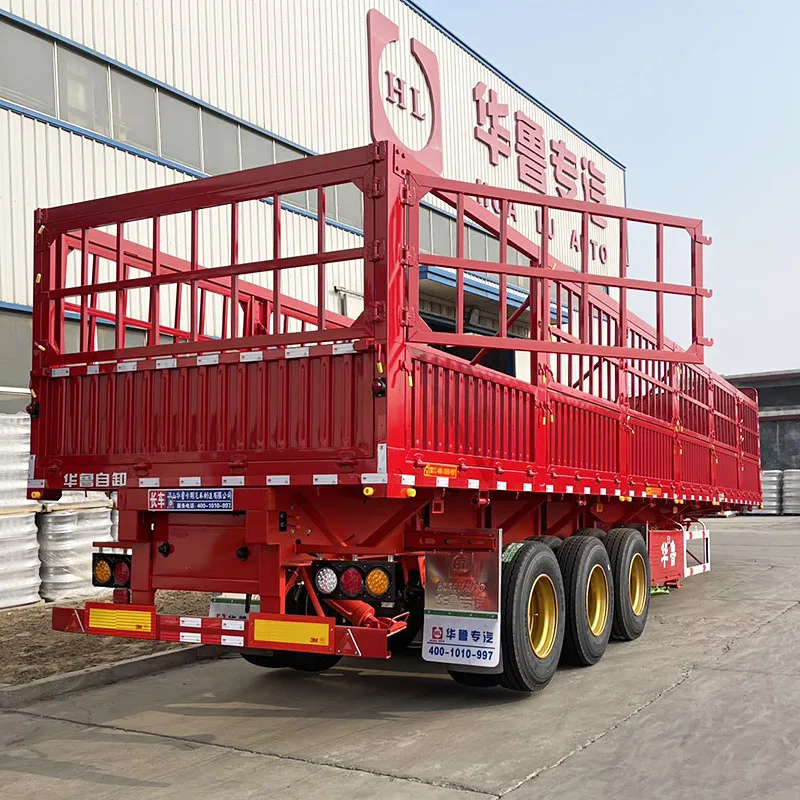
In Chile, a freight operator faced a familiar challenge: long distances, tight schedules, and loads that changed from palletized goods to sacks, crates, and machinery. Empty or half-filled returns cut into margins. After adding a Hualu Fence Semi-trailer, the fleet gained a flexible, rugged platform. Its fence system secures odd-shaped cargo, while the reinforced chassis handles Chile’s coastal roads, central valley routes, and Andean slopes. On one typical week, the trailer carried construction supplies to Santiago, then returned with agricultural crates instead of running empty. Loading became faster, damage dropped, and dispatch could combine mixed loads with confidence. The result: 10% higher utilization across multi-cargo operations, fewer wasted kilometres, and stronger profit per trip. For Chilean hauliers moving everything from machinery to produce, the Hualu Fence Semi-trailer turns every route into a more productive run.
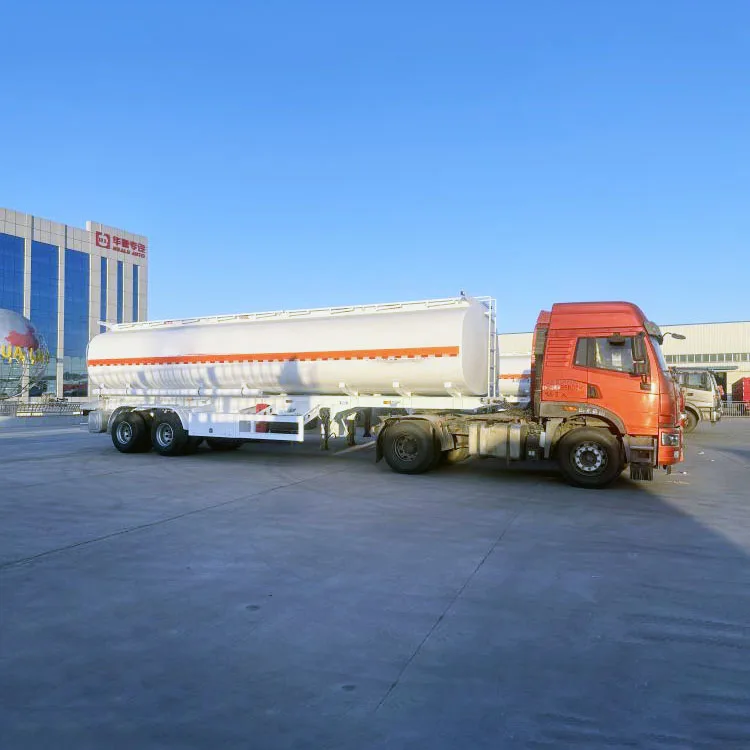
In the Middle East, fuel transport isn't just about capacity—it's about surviving extreme heat, long desert hauls, and cross-border regulations. Our customizable 2-axle and 3-axle tank semi-trailers are engineered to deliver maximum payload with zero compromise on safety or durability.
A Mexican auto logistics operator hauls new SUVs and pickups from Bajío assembly plants to the Pacific and Gulf ports for export. Its old car carriers scratched and dinged vehicles at a 4% damage rate, loaded slowly, and corroded on coastal routes. Hualu car carriers with low-angle hydraulic ramps, adjustable decks, and soft tie-downs cut the damage rate to 1% — 99% damage-free — and raised capacity from six to eight cars.
In Africa's harsh operating environments, generic tankers fail under heat, potholes, and shifting regulations. Our customizable 2-axle and 3-axle tank semi-trailers are engineered to withstand extreme conditions while maximizing payload efficiency for every route.